Food arrives in minutes. Fashion hasn’t caught up.
People who need an outfit for a specific occasion can’t find nearby stock, and boutiques miss walk-in sales.
Fashion delivered like food, on demand.
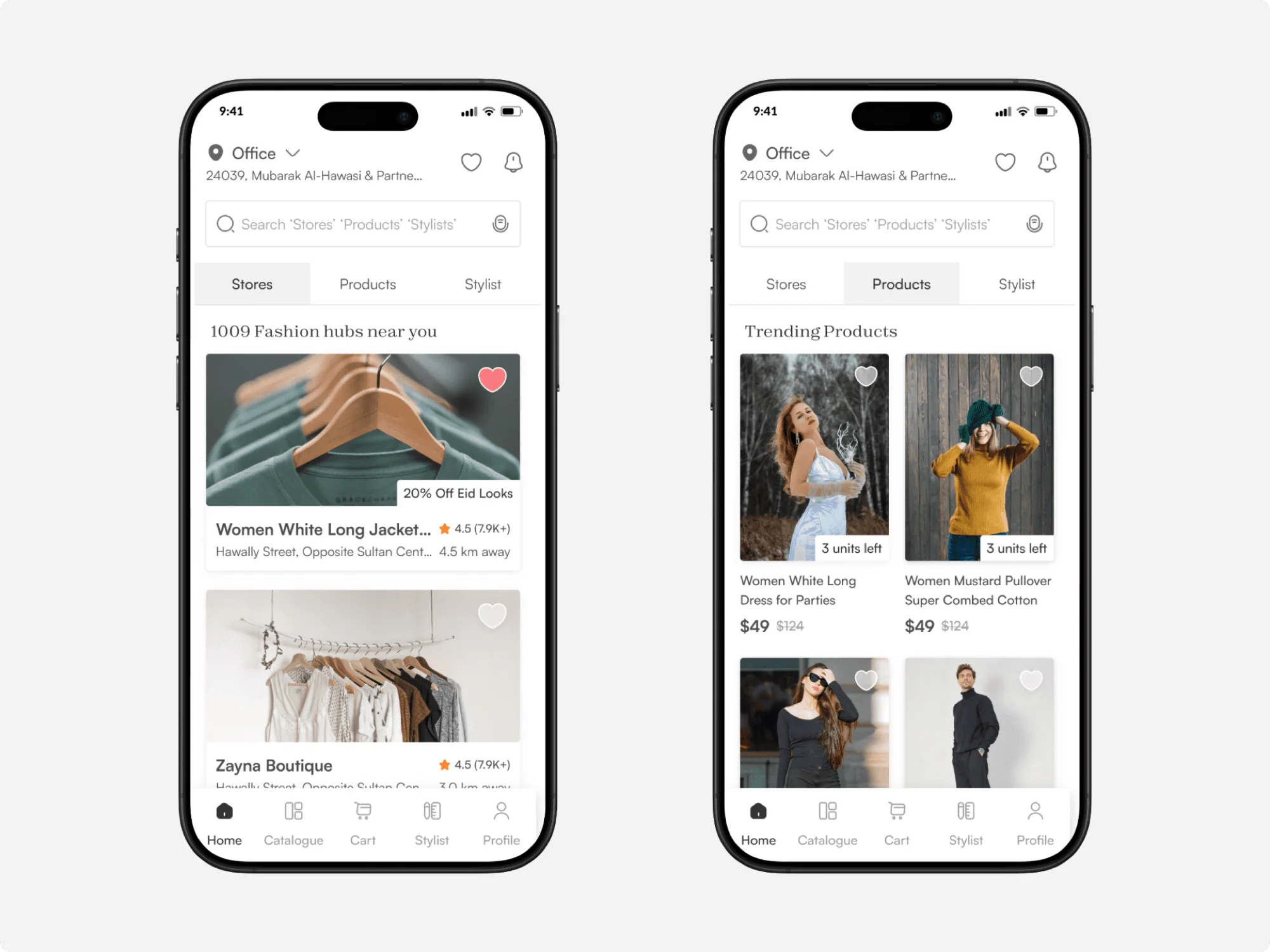
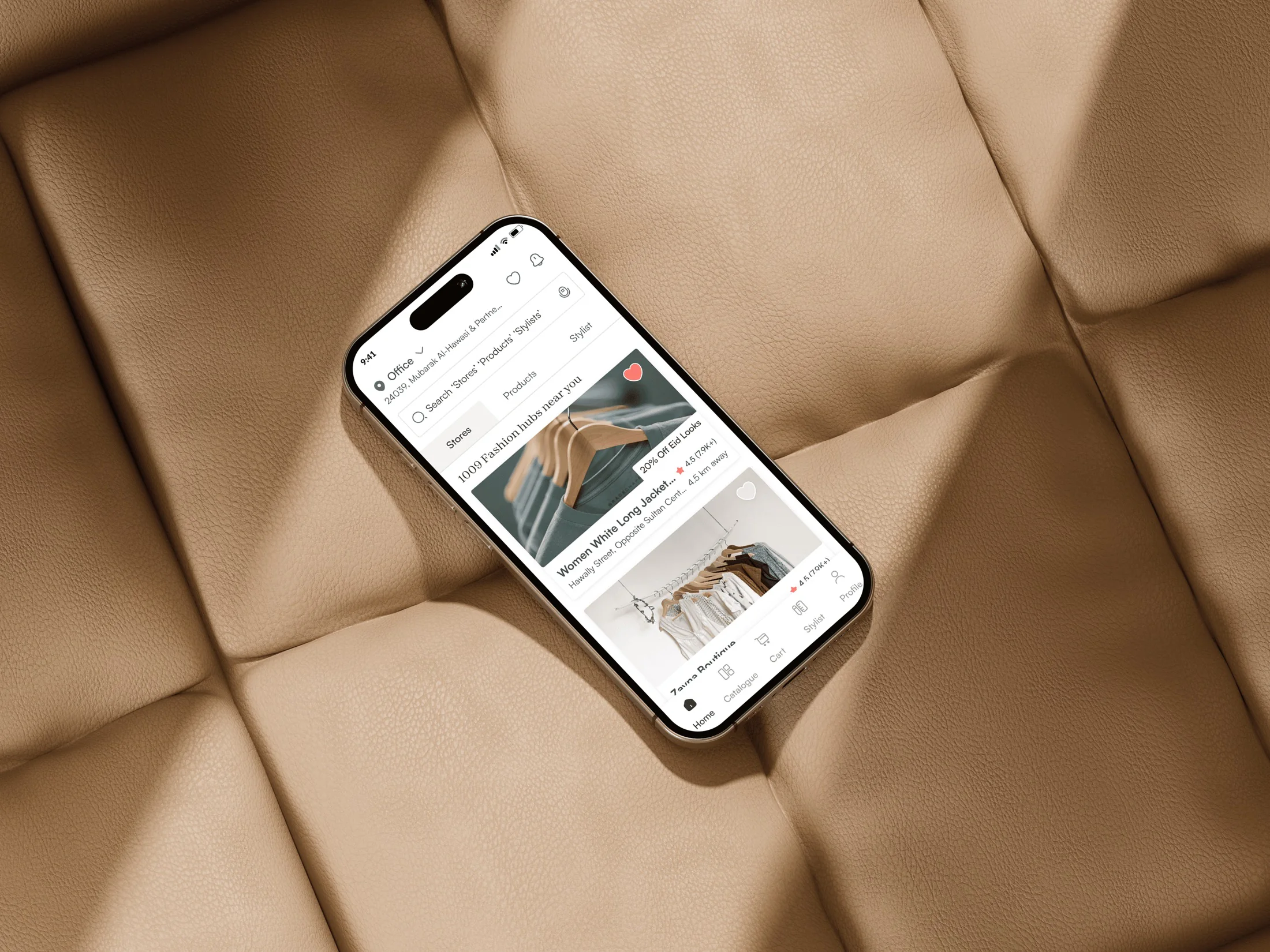
An on-demand fashion app connecting buyers, nearby boutiques and live stylists, with instant delivery.
Faster decision-making
Boost in conversion
In-depth interviews across four groups
People who need an outfit for a specific occasion can’t find nearby stock, and boutiques miss walk-in sales.
20 interviews, affinity mapping, two personas, paper sketches and final mobile designs.
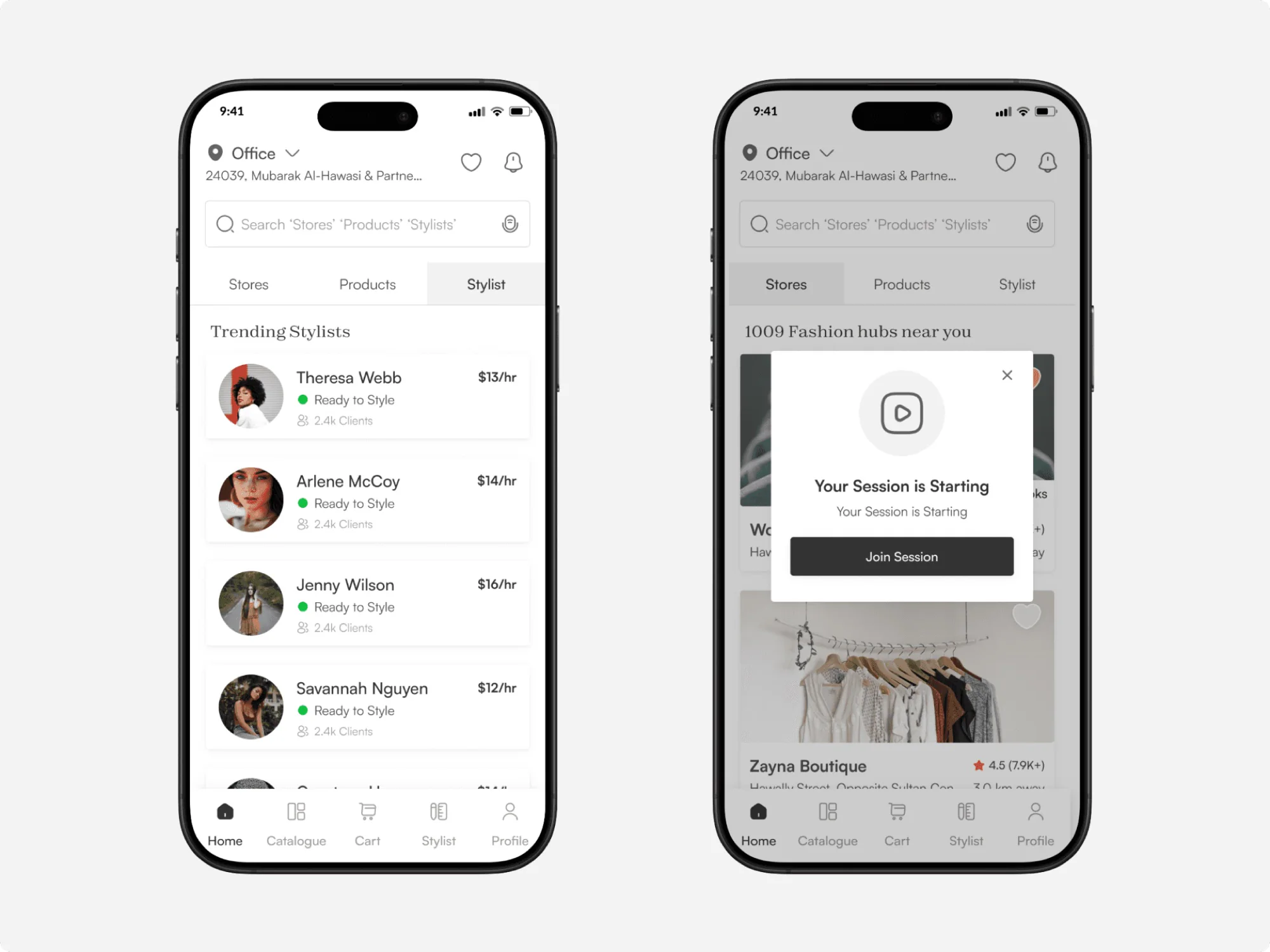
Live stylists inside the journey and hyperlocal stock with instant delivery. The app is live on Google Play.
I studied real shopping behaviour first, then designed a concept that fits naturally into people’s lifestyles and supports buyers and sellers alike.
20 in-depth interviews across four groups.
Sticky notes to themes to feature ideas.
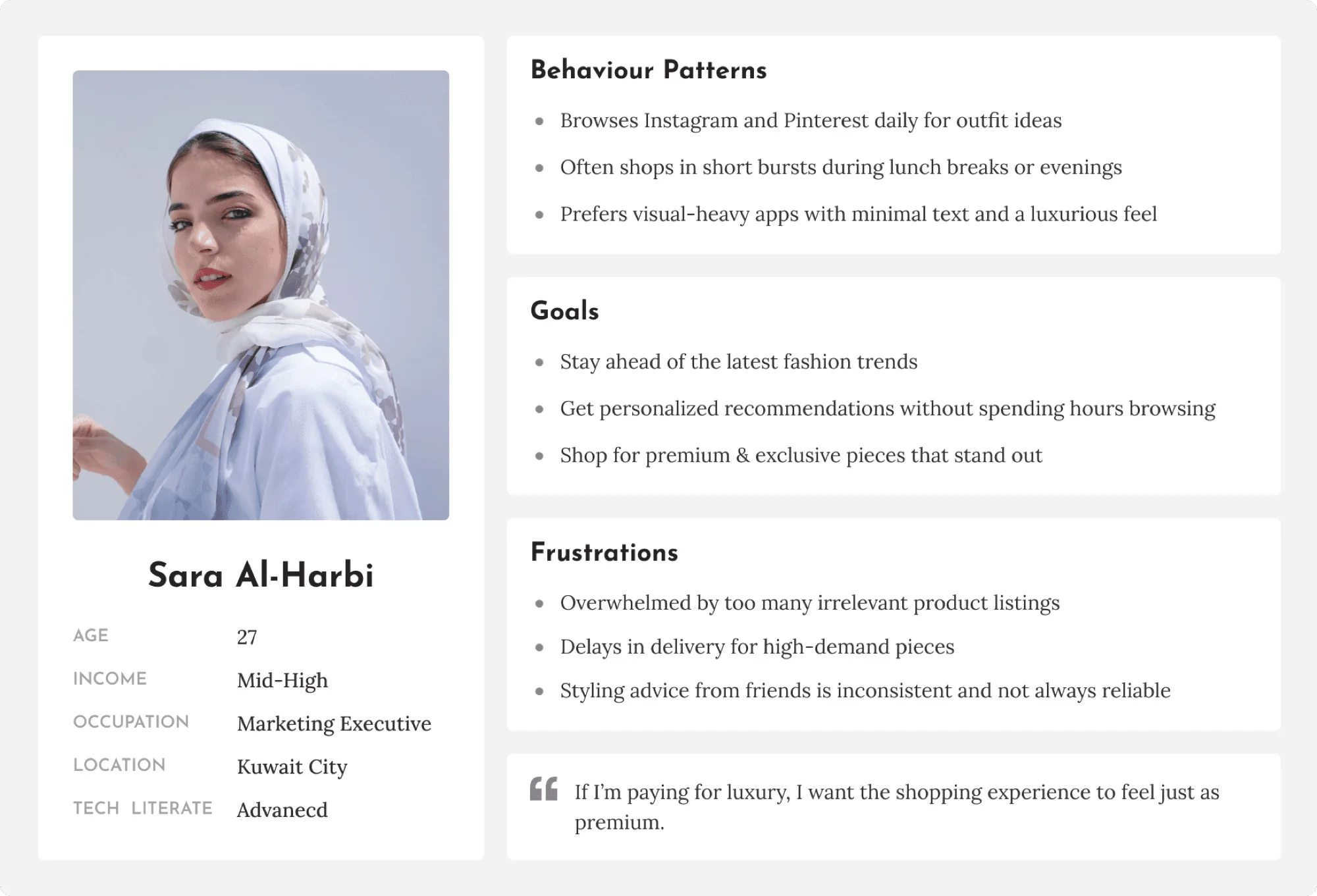
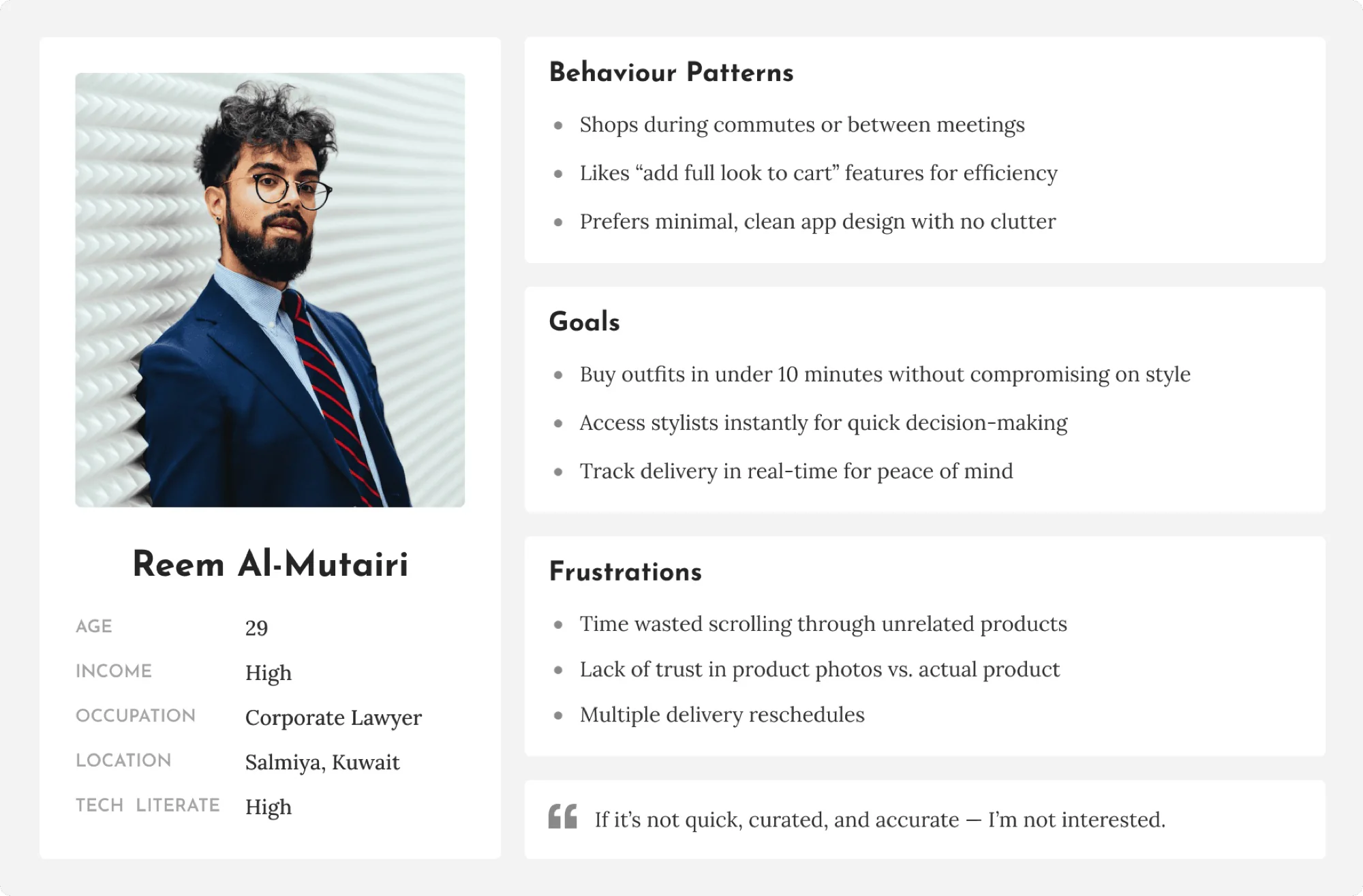
A buyer and a seller persona.
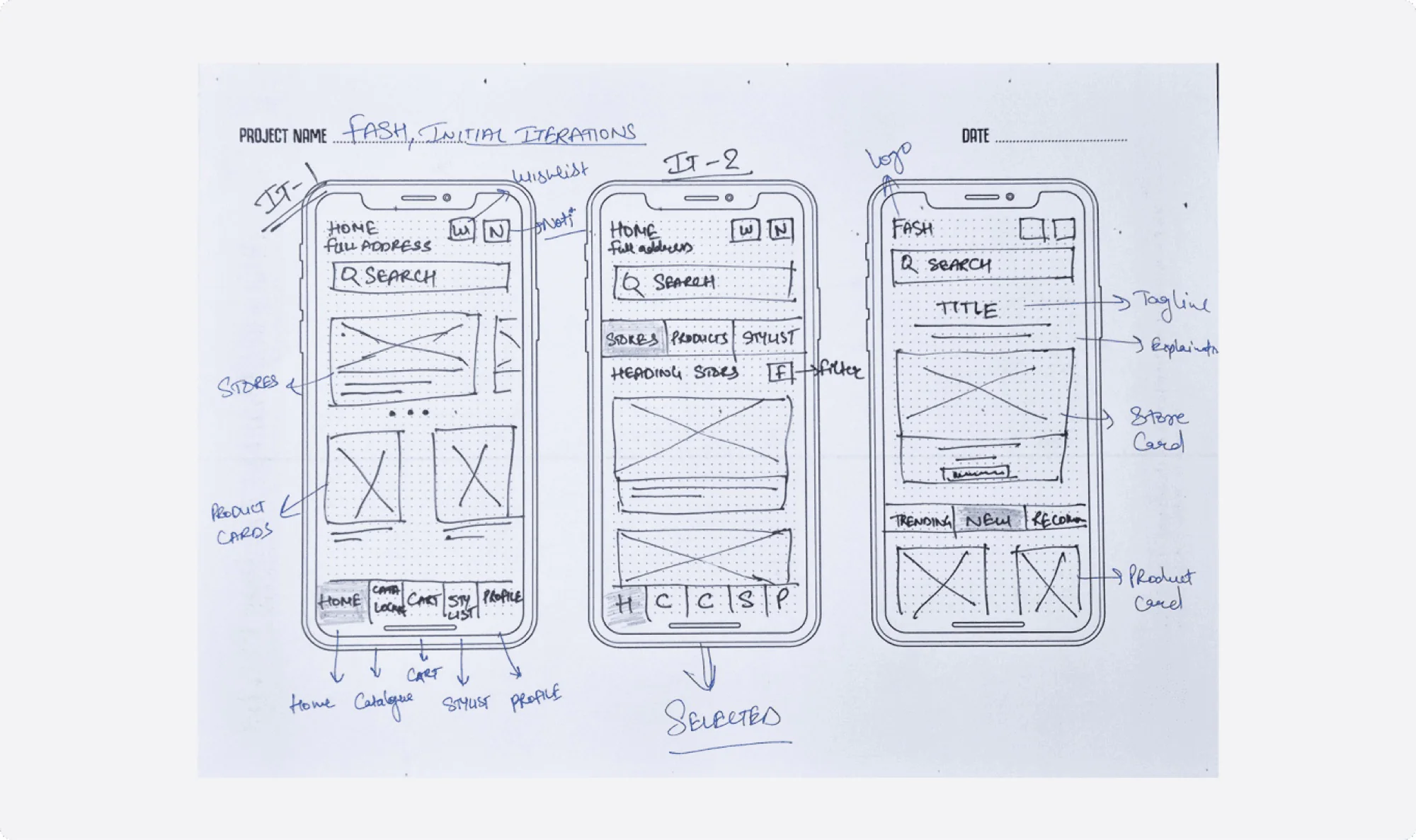
Mobile flows on pen and paper first.
High-fidelity screens for the live app.
Food and groceries arrive in minutes. Fashion hasn’t caught up, and the gap frustrates people.
Need a last-minute outfit, can’t find stores nearby and waste time checking stock.
Miss out on potential walk-in sales.
Study behaviour first. Then design for both sides.
I dove deep into real shopping behaviours to design a concept that fits naturally into users’ lifestyles, saves time, and supports both buyers and sellers seamlessly.
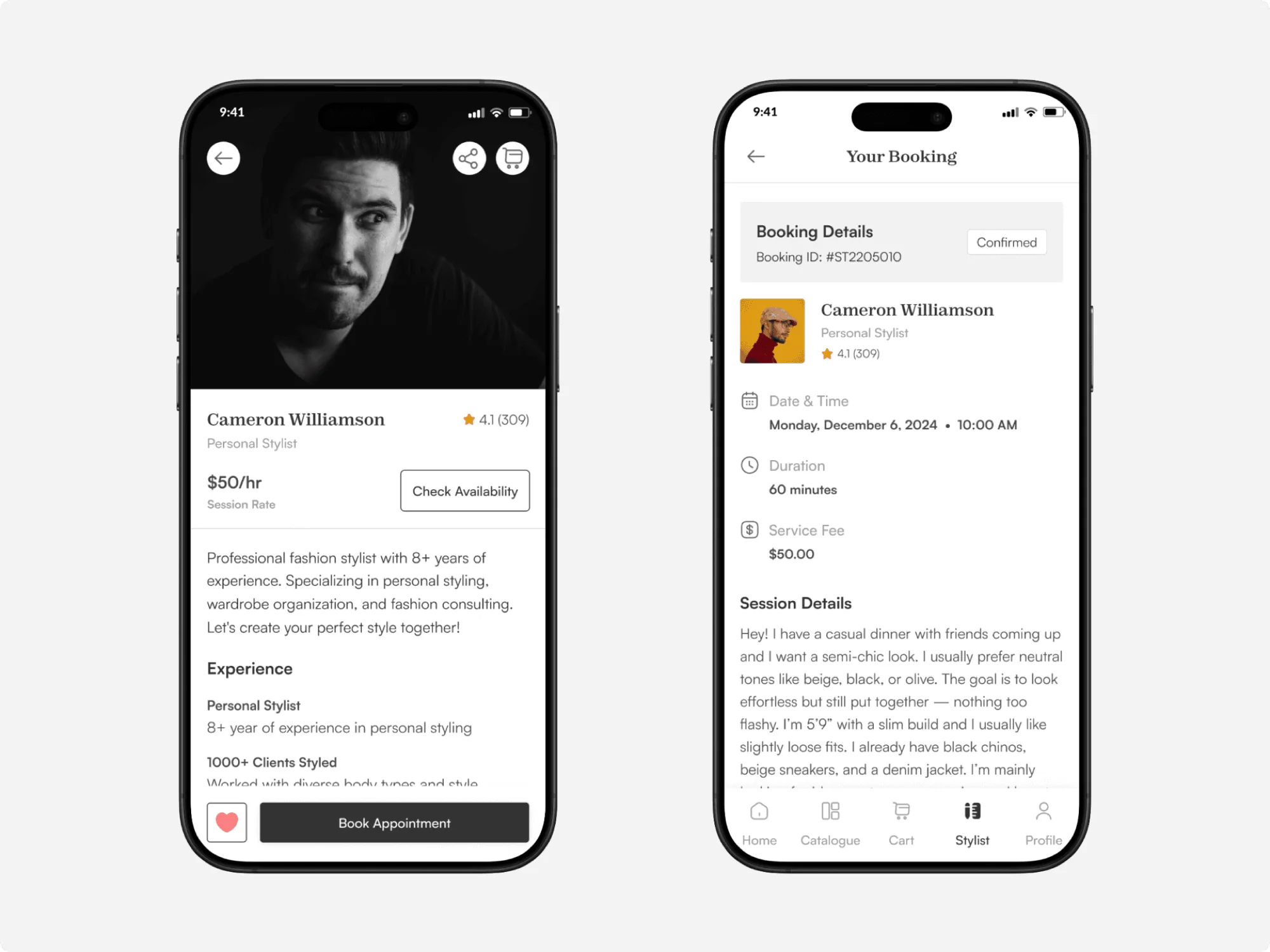
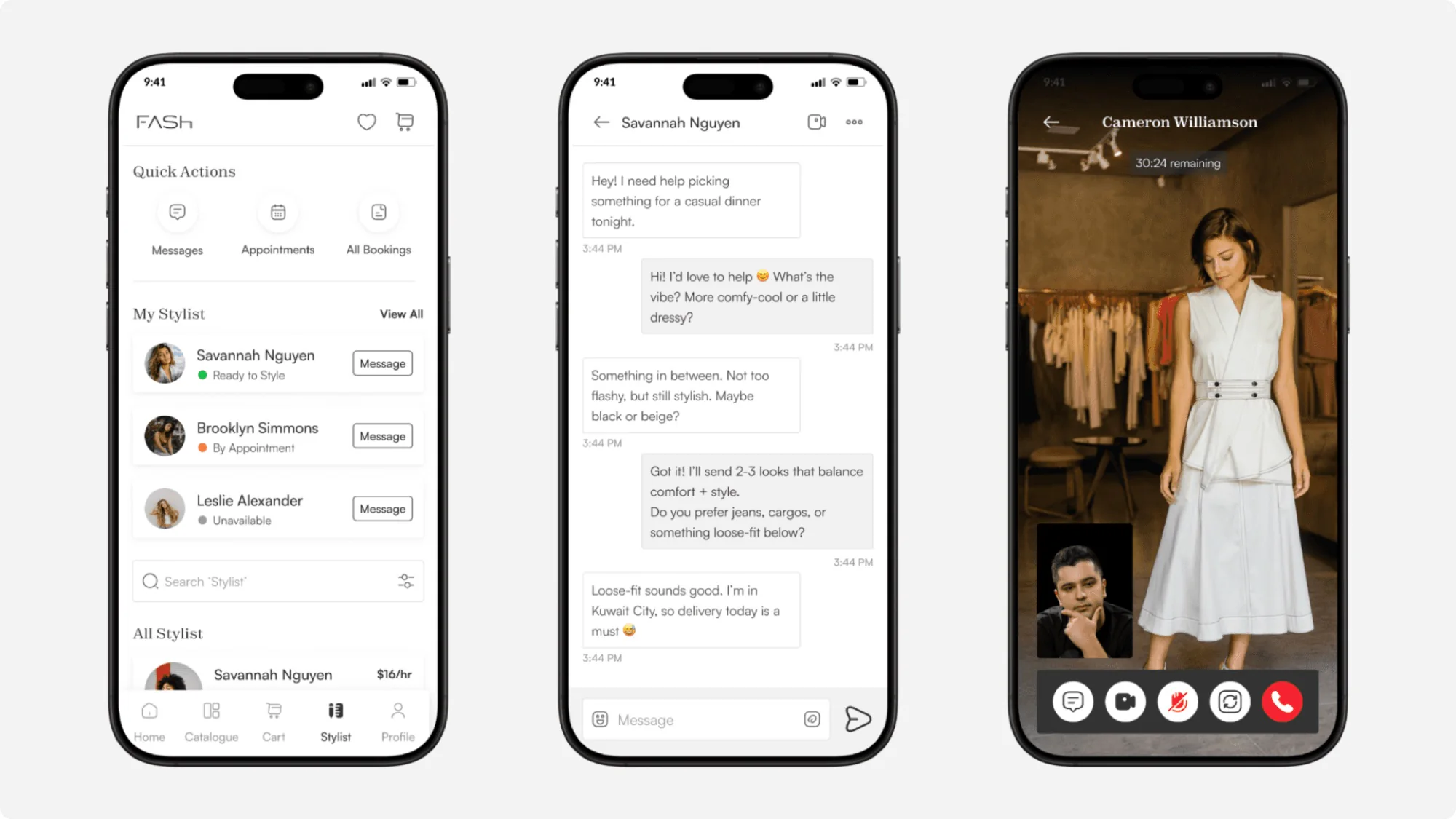
Reduced time-to-style with stylist support. Live stylists inside the buyer journey cut hesitation and shorten decisions.
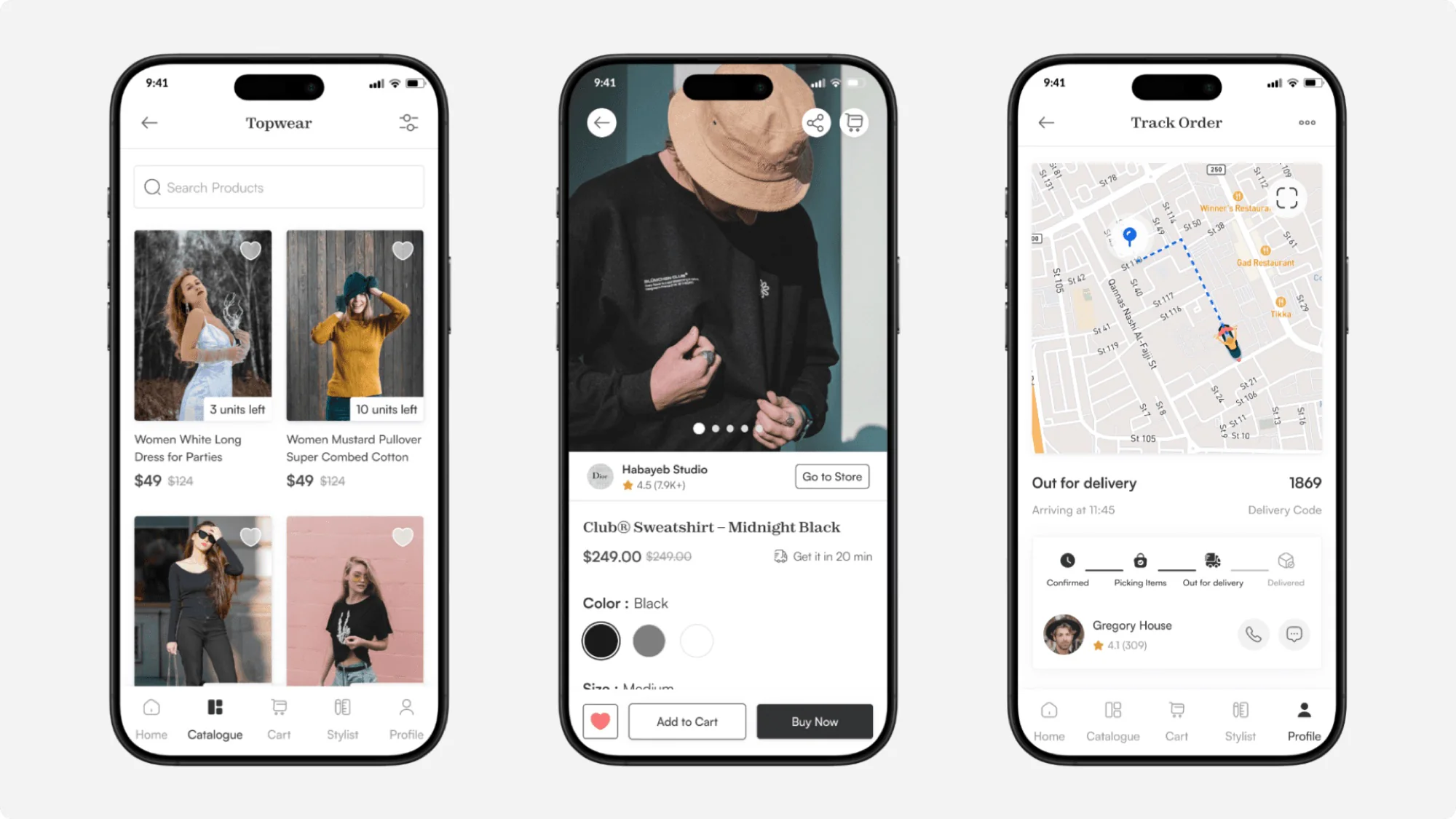
Hyperlocal inventory and instant delivery. Only stock from nearby stores, delivered instantly, so people buy sooner.
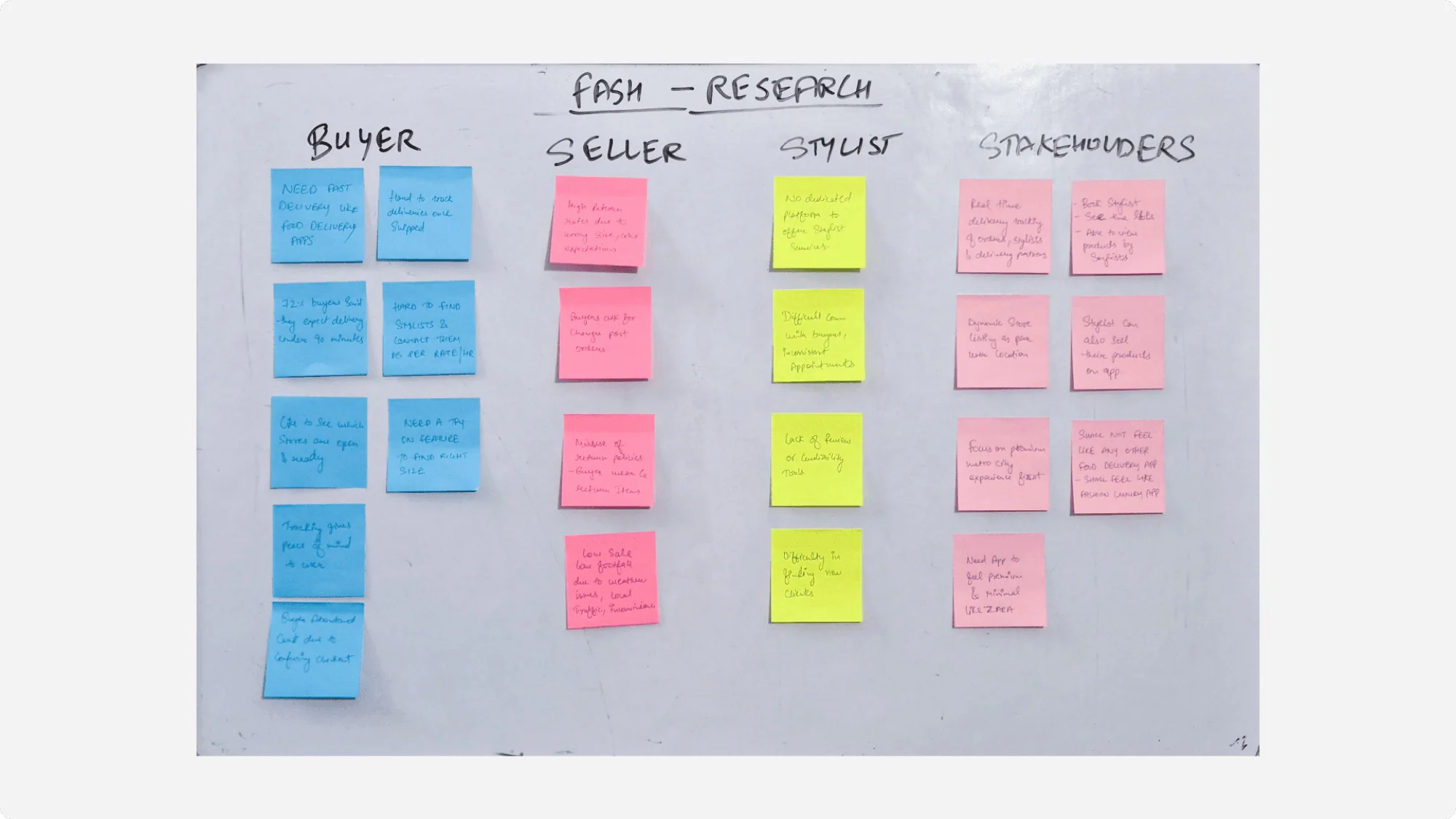
Four groups, five people each: the people who buy, sell, style and run the business.
Product Owner, CTO, Marketing Lead, Ops Head, Stylist Partnership Manager
Targeted in Kuwait, aged 22–40
Boutique owners and store managers
Independent and store-affiliated
Buyers · Stylists “Instant style advice.”
Stylists recommend from store stock, right in the chat.
Stylists “Know the buyer first.”
Preferences, past purchases and size, up front.
Buyers “Trust before buying.”
A clear 2-hour return, easy to find in the app.
Buyers “Fewer steps to pay.”
Fewer fields, saved details, buy straight from a recommendation.
Stakeholders “Premium, not food delivery.”
Look and flow of luxury apps like Farfetch and Net-a-Porter.
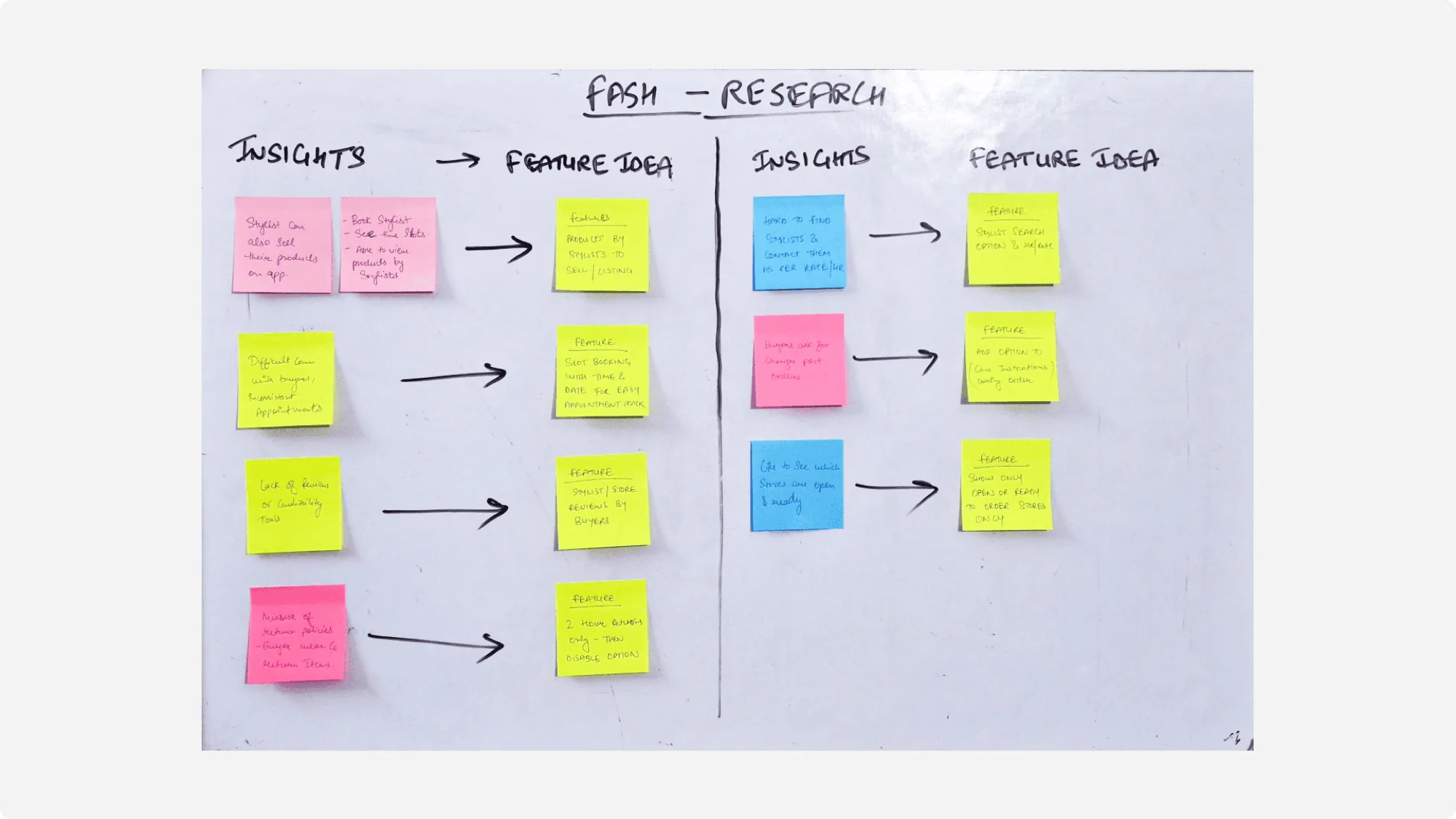
From sticky notes to features, every idea backed by real feedback.
Capture. Main interview points on sticky notes, one colour per group.
Filter. Removed repeats and anything design can’t solve.
Cluster. Grouped what was left into themes.
Ideate. Wrote feature ideas next to each theme.
Rapid sketches of the key mobile flows came first: discovery, stylist chat, product detail and order tracking.
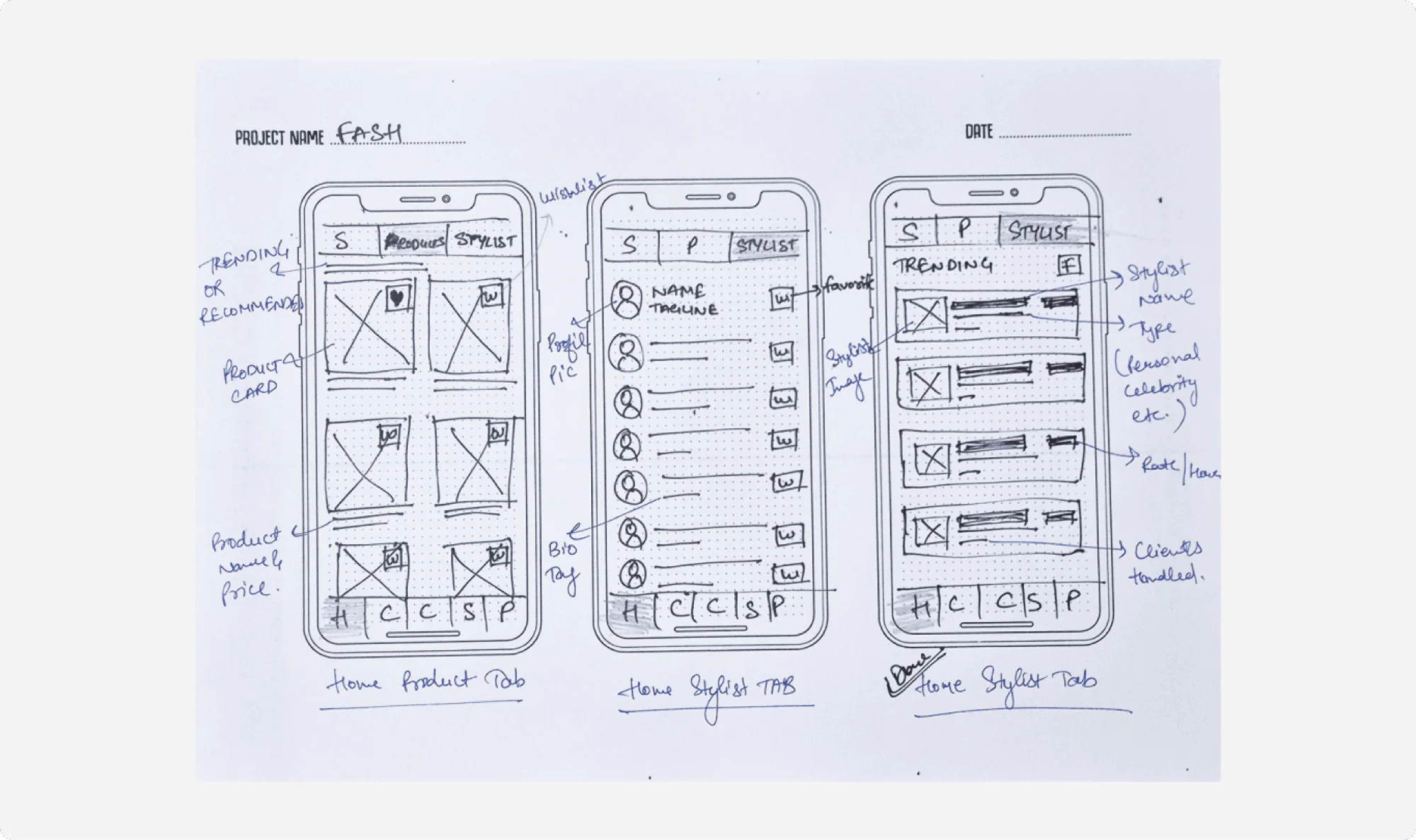
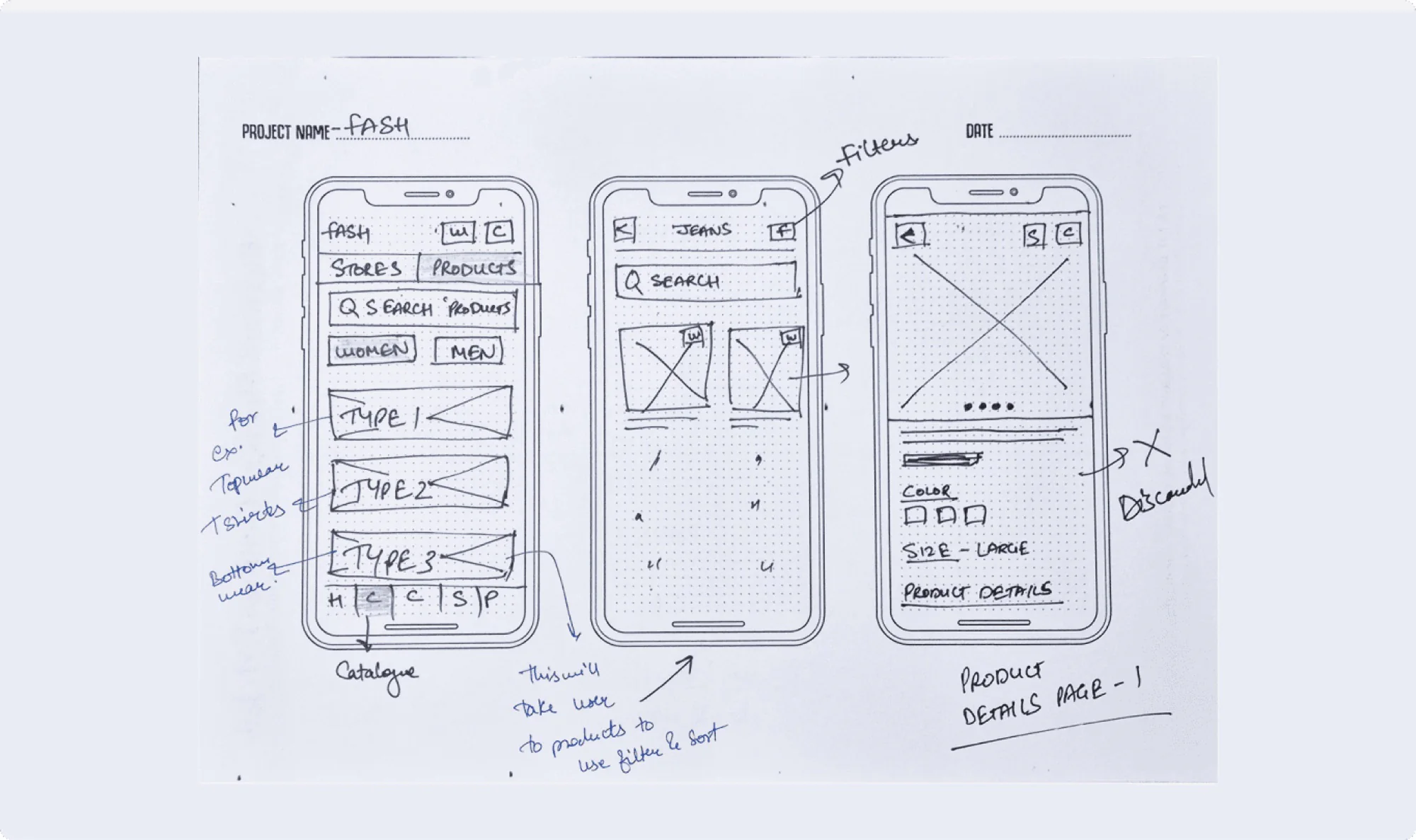
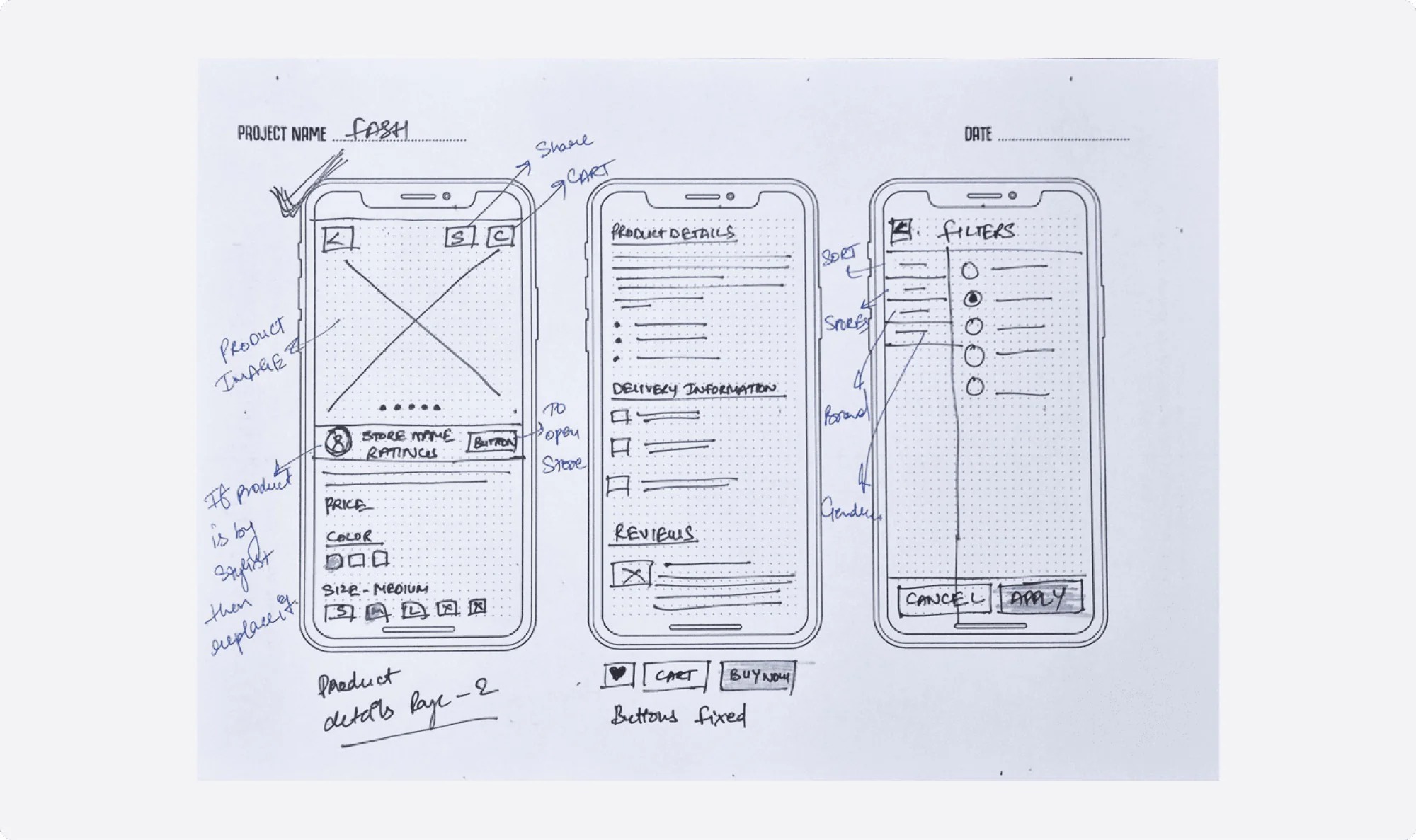
Hyperlocal boutique discovery, stylist booking and chat, and one clean path from catalogue to checkout and live order tracking.