Clothes rarely fail on style. They fail on fit.
Size charts create returns and sizing anxiety. 62% of the shoppers I surveyed struggle to put outfits together, and none of the seven stores I benchmarked classifies body shape.
Find the silhouette first. Then the clothes.
A fashion store that turns four body measurements into a silhouette, then shows only the cuts, fabrics and complete looks that suit it.
From four measurements to your silhouette
One-to-one interviews behind the design
Silhouettes, each with its own curated looks
Size charts create returns and sizing anxiety. 62% of the shoppers I surveyed struggle to put outfits together, and none of the seven stores I benchmarked classifies body shape.
Shoulders, bust, waist and hips become one of five silhouettes in about a minute. Cuts and complete looks then adapt to that shape.
Designed in Figma, built in HTML and CSS, checked against WCAG 2.1 AA. A concept: no real orders and no accounts.
A self-initiated concept project. I did the research, the UX, the UI and the front-end build myself, from the first survey question to the deployed store.
Survey, interviews, affinity map and a benchmark of seven stores.
Persona Elara, card sorting, goals and solutions.
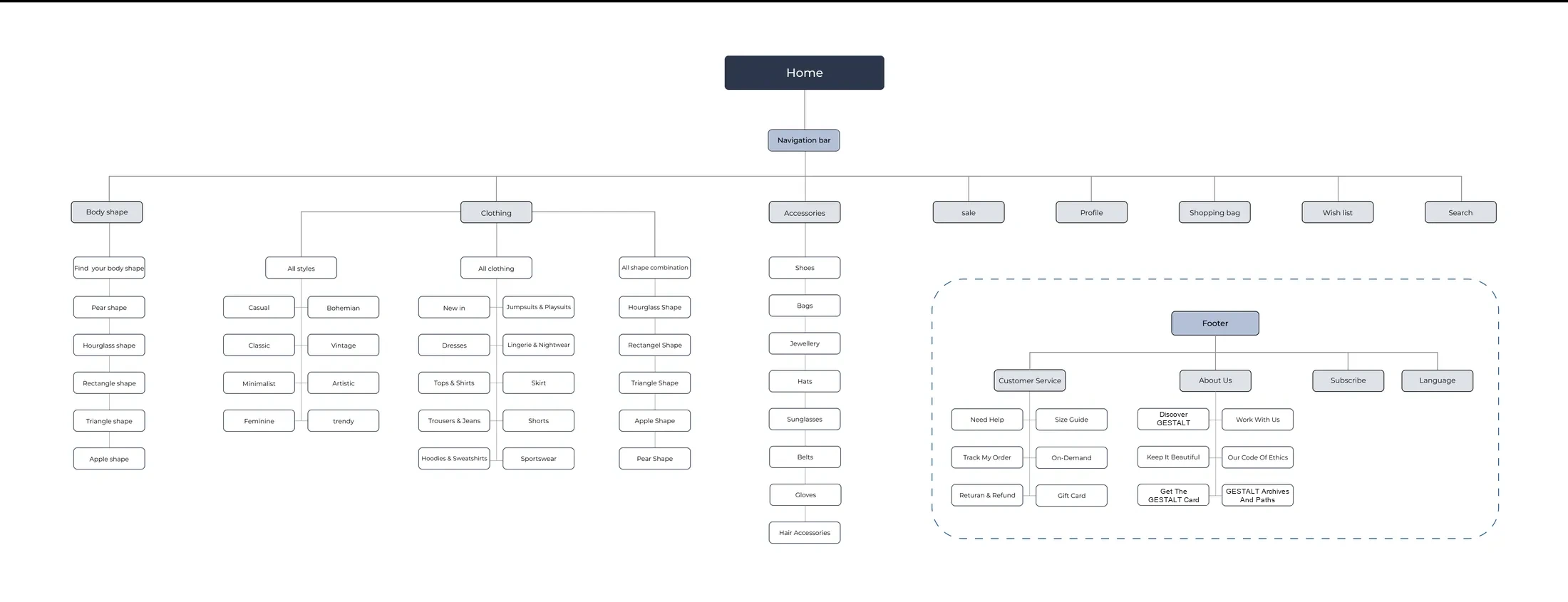
Task flow, user flow and a bilingual site map.
Sketches, wireframes, mood board and a UI kit.
Two test rounds, an accessibility audit and a live store.
Standard size tables create friction, returns and sizing anxiety. GESTALT starts from the body instead: four measurements in, one silhouette out.
Most stores sort by size and trend. The shape of the body decides what fits, so it should decide what you see first.
An adaptive catalogue that highlights pieces built for your proportion
Nobody wants a body-measuring session before browsing. The first answer has to come fast.
A calculator that turns shoulder, bust, waist and hip into a silhouette
62% of surveyed shoppers struggle to coordinate outfits. A good piece alone does not solve that.
Ready-made sets that combine top, bottom and layer in proportion
Four measurements. One silhouette.
Enter your measurements, get your silhouette, see the styles and sets made for it, then choose with confidence. That is the whole product in four steps.
Online shoppers keep running into fit frustration: 62% struggle to put outfits together and 68% name sizing differences as their main barrier to buying.
60 responses
61 responses
60 responses
50 responses
Ten in-depth one-to-one interviews mapped expectations, fit pain points and shopping habits. Five demands came up again and again:
Editorial photography on real models
An anthropometric fit breakdown and advice
Clear information on fabric and drape
Complete set suggestions
A 100-day fit guarantee with easy exchange
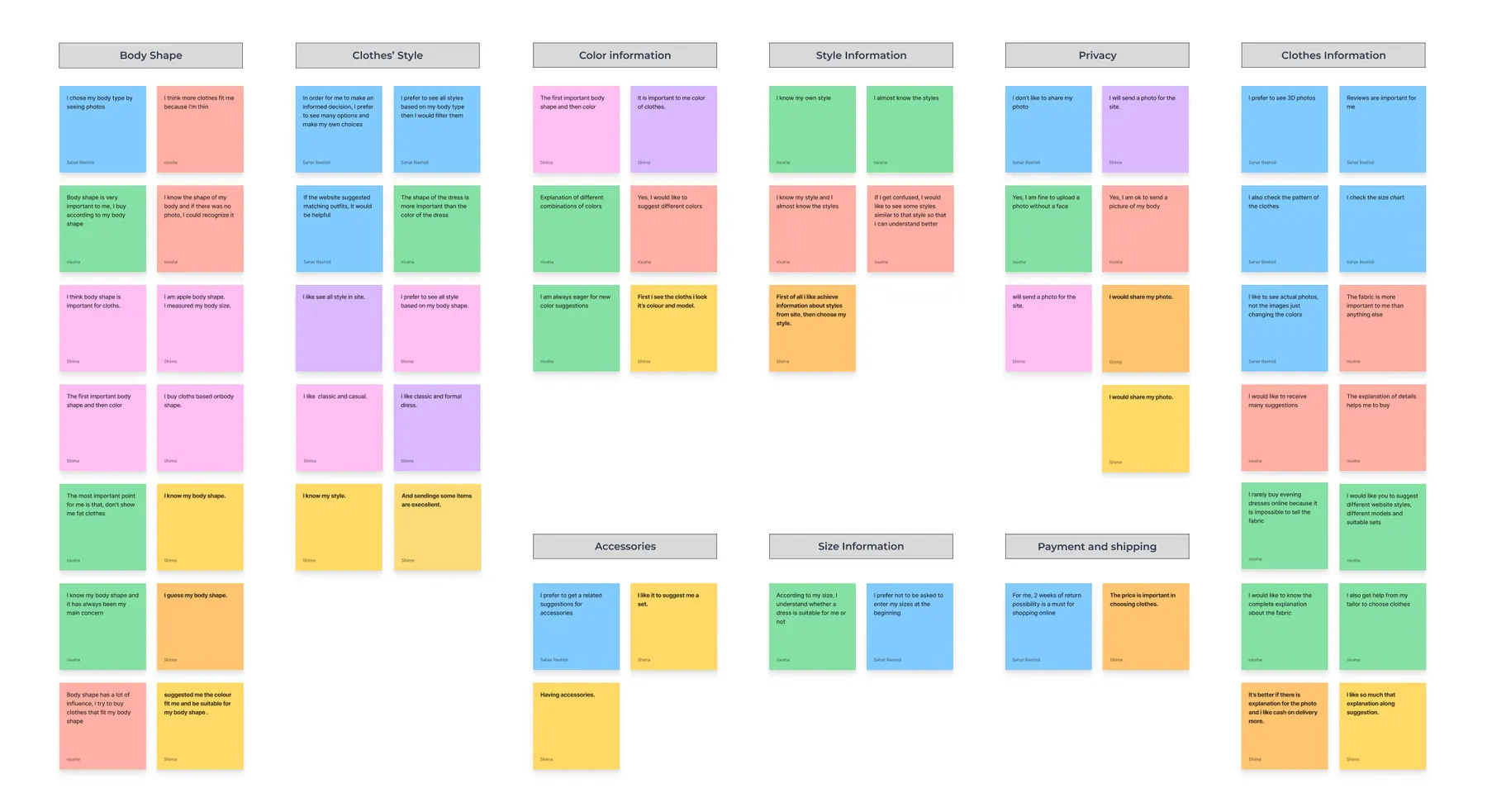
Interview and survey answers were clustered into nine groups, from body shape and style to colour, privacy, size and payment.
Seven fashion platforms are good at generic colour and size filters. None of them classifies the body’s silhouette automatically or promises a match by proportion.
| Platform | Body shape info | Curated looks | Silhouette filter | Colour & palette | Size & fit guarantee | Bilingual UX |
|---|---|---|---|---|---|---|
| Zalando | ✕ | ✓ | ✕ | ✓ | ✓ | ✕ |
| SHEIN | ✕ | ✕ | ✕ | ✓ | ✕ | ✕ |
| Harrods | ✕ | ✕ | ✕ | ✓ | ✕ | ✕ |
| Karen Millen | ✓ | ✕ | ✕ | ✓ | ✓ | ✕ |
| Rinascente | ✕ | ✕ | ✕ | ✓ | ✕ | ✕ |
| INNO | ✕ | ✕ | ✕ | ✓ | ✕ | ✕ |
| ZARA | ✕ | ✓ | ✕ | ✓ | ✓ | ✕ |
| GESTALT | ✓ | ✓ | ✓ | ✓ | ✓ | ✓ |
Nobody sells by proportion.
That gap became the product: a store that begins with the body and only then shows the clothes.
Calculate the silhouette for the user, so there is no guesswork.
Curate complete, proportion-tested looks.
Give honest guidance on which cuts flatter which body.
One persona, drawn from the interviews, stood in for every design decision that followed.

“I love architectural fashion. I just need a shop that guarantees the silhouette fits my proportions every time.”
Elara leads design projects on tight schedules. She loves timeless tailoring but has no patience for the trial and error of sizing online. She wants a refined, confident shopping experience.
A hybrid card sort with 15 participants set the information hierarchy: by silhouette, by looks, by category and by season.
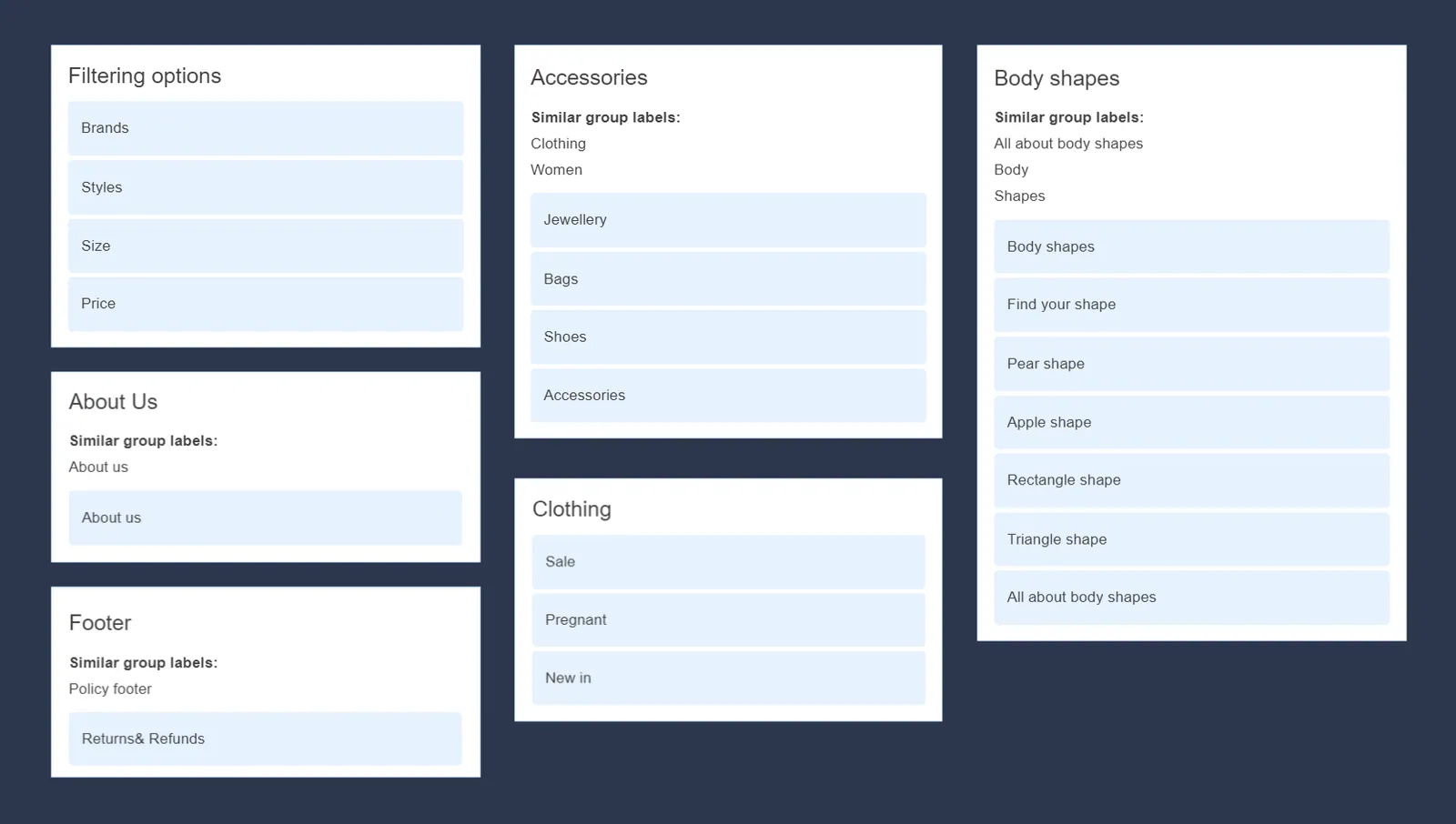
Final top-level navigation
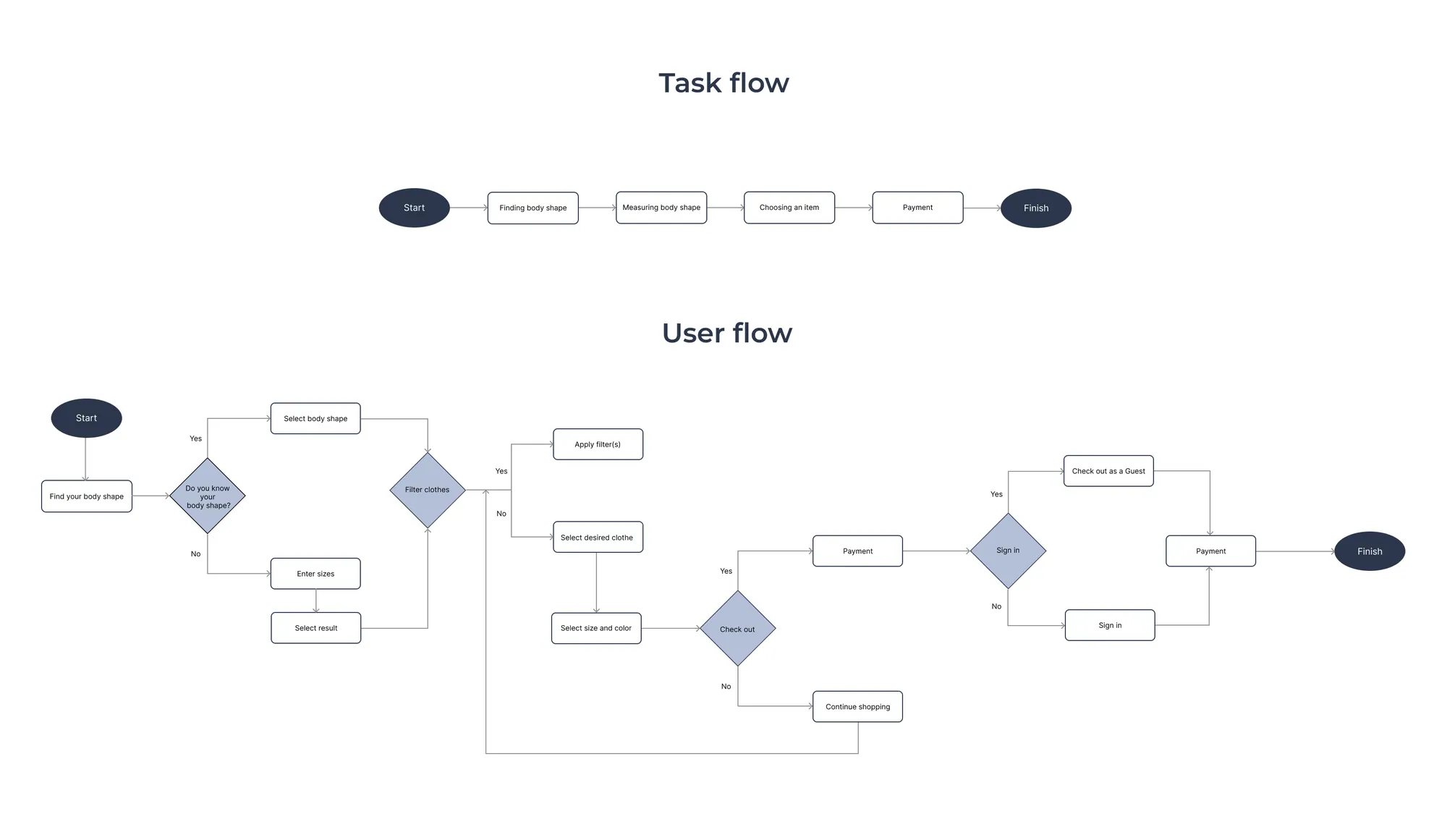
The flows were drawn before any screen, so every page earns its place on the way from first measurement to rapid checkout.
The optimised flow runs from instant measurement input to a personal silhouette, then to the looks for it and on to checkout.
The site map links four areas: the silhouette finder, the collection, complete looks and customer care. German and English share the same structure.
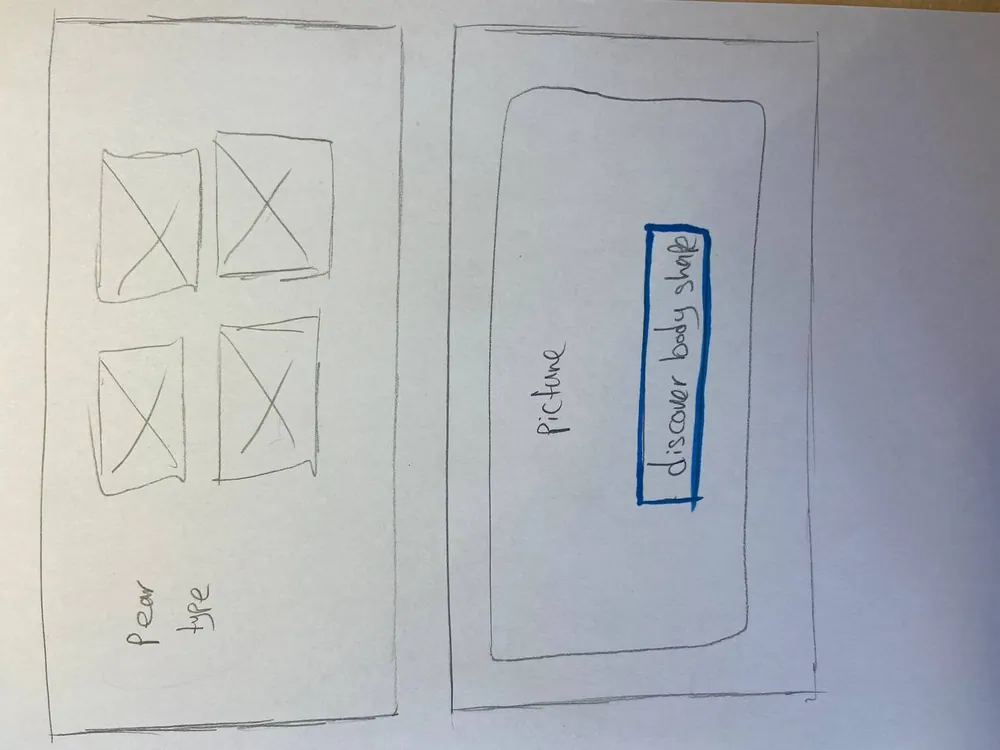
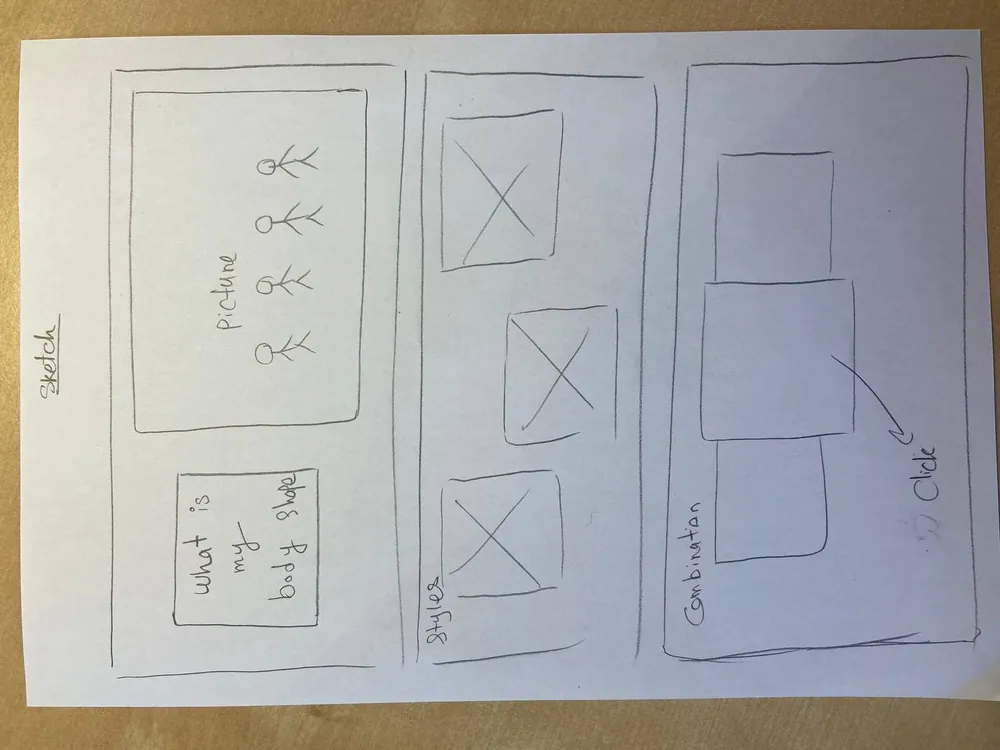
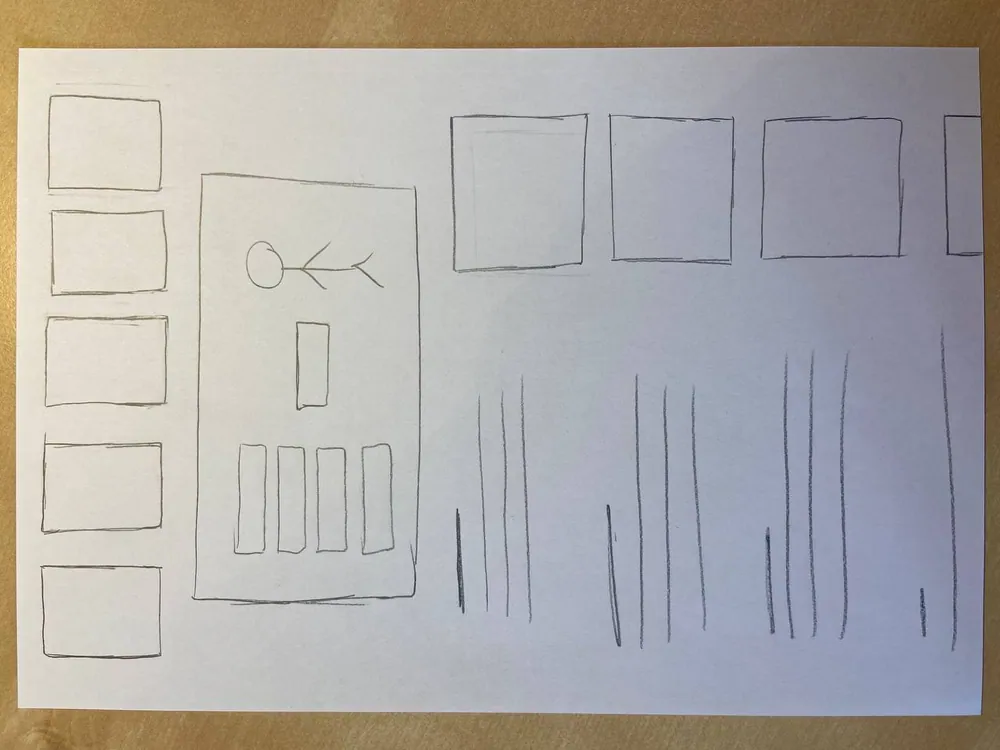
Low-fidelity ideas first: where the calculator sits and how technical inputs can live next to an editorial look.
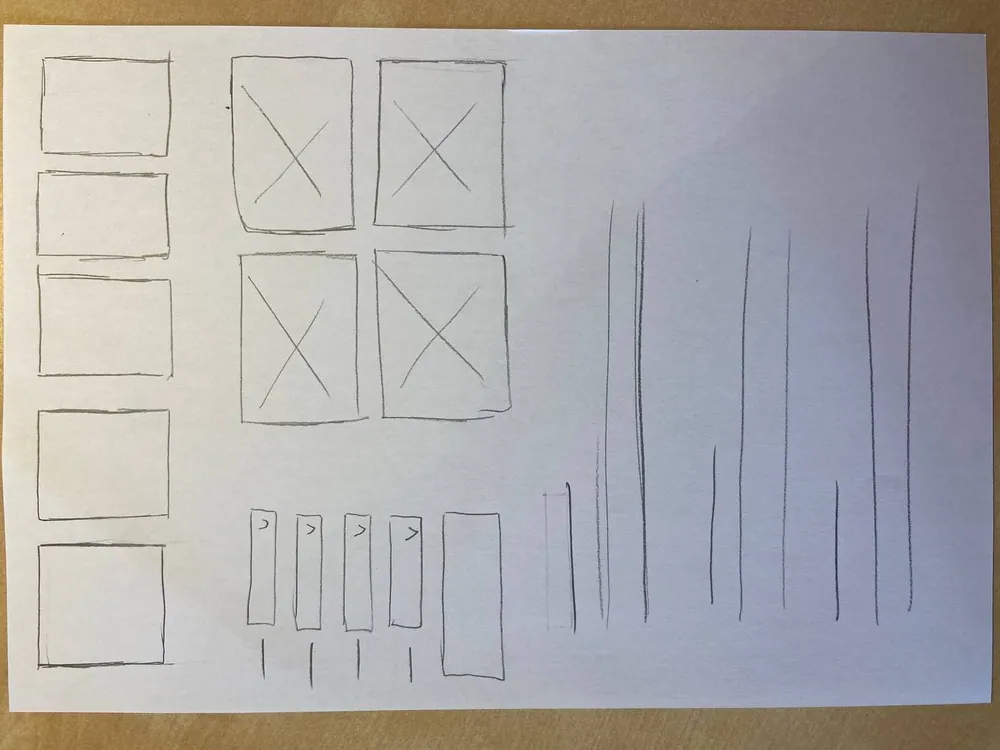
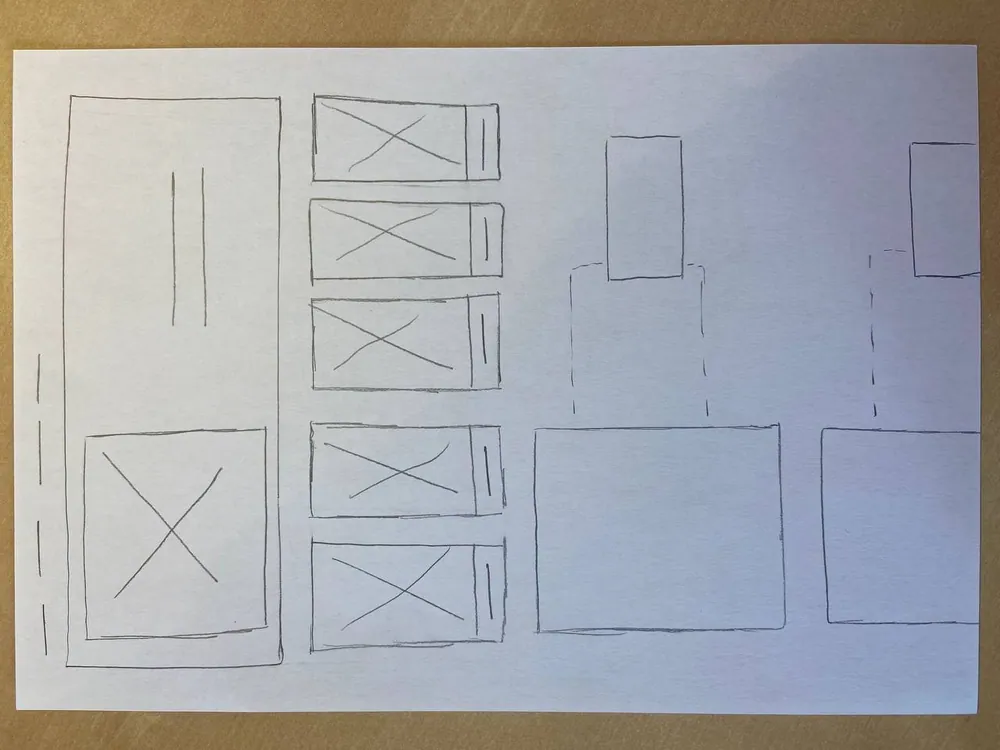
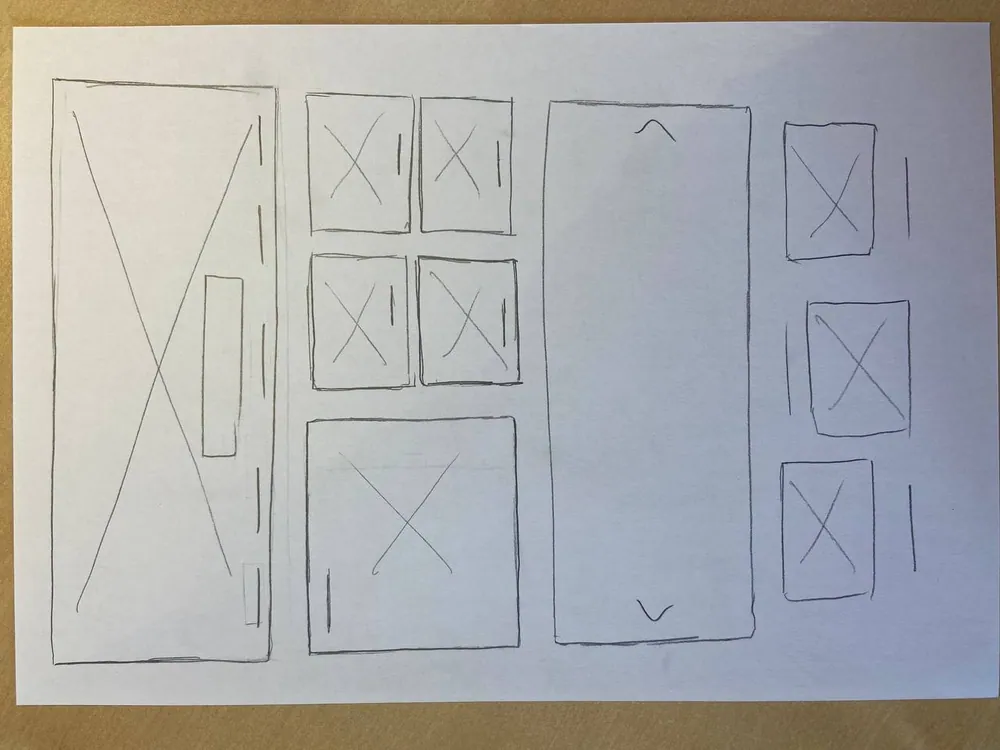
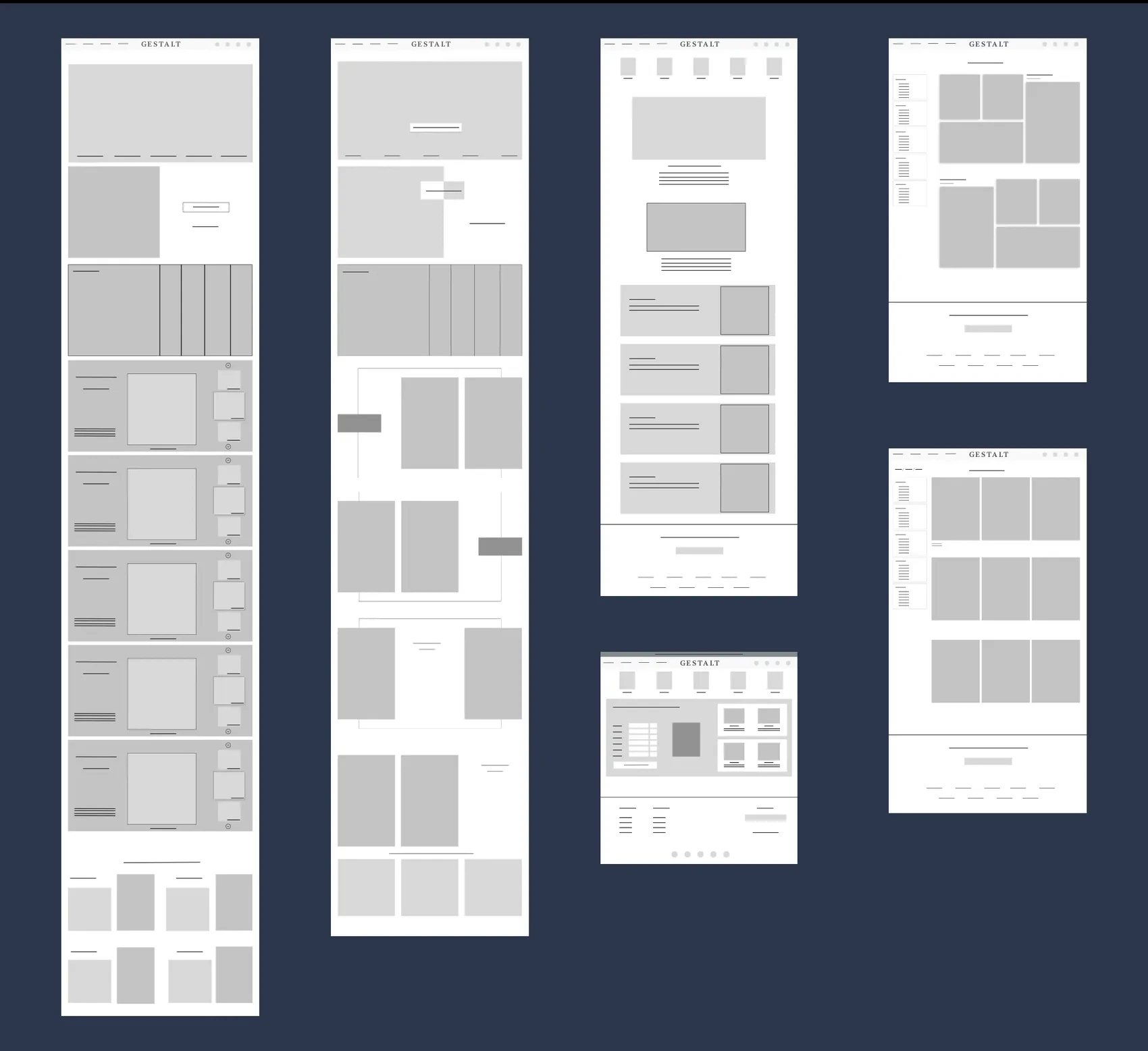
Wireframes in Figma settled responsive layouts, touch-target sizes, AA contrast and the move from desktop to mobile.
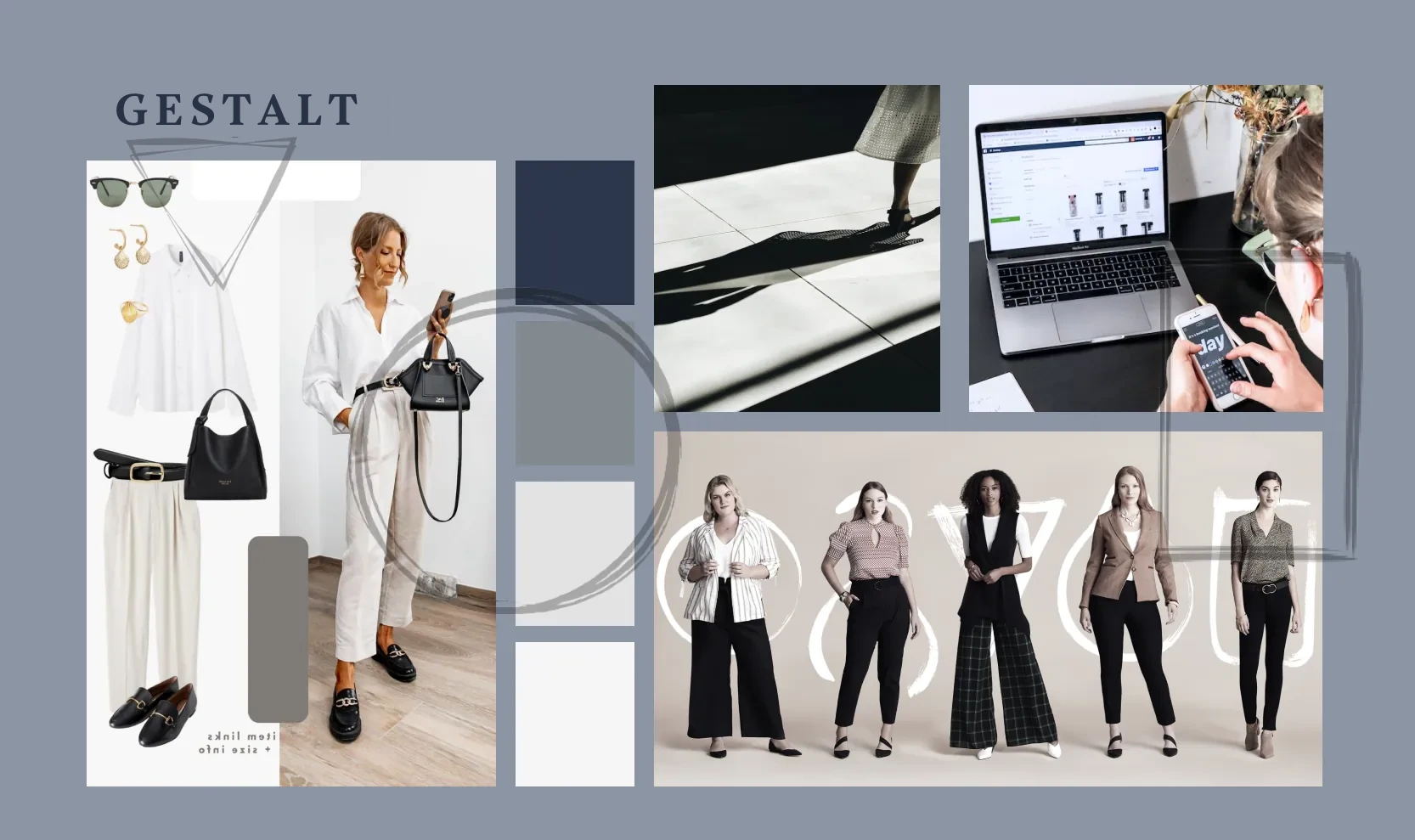
The mood board draws on Bauhaus geometry, Parisian tailoring, architectural minimalism and the way natural fabric drapes.
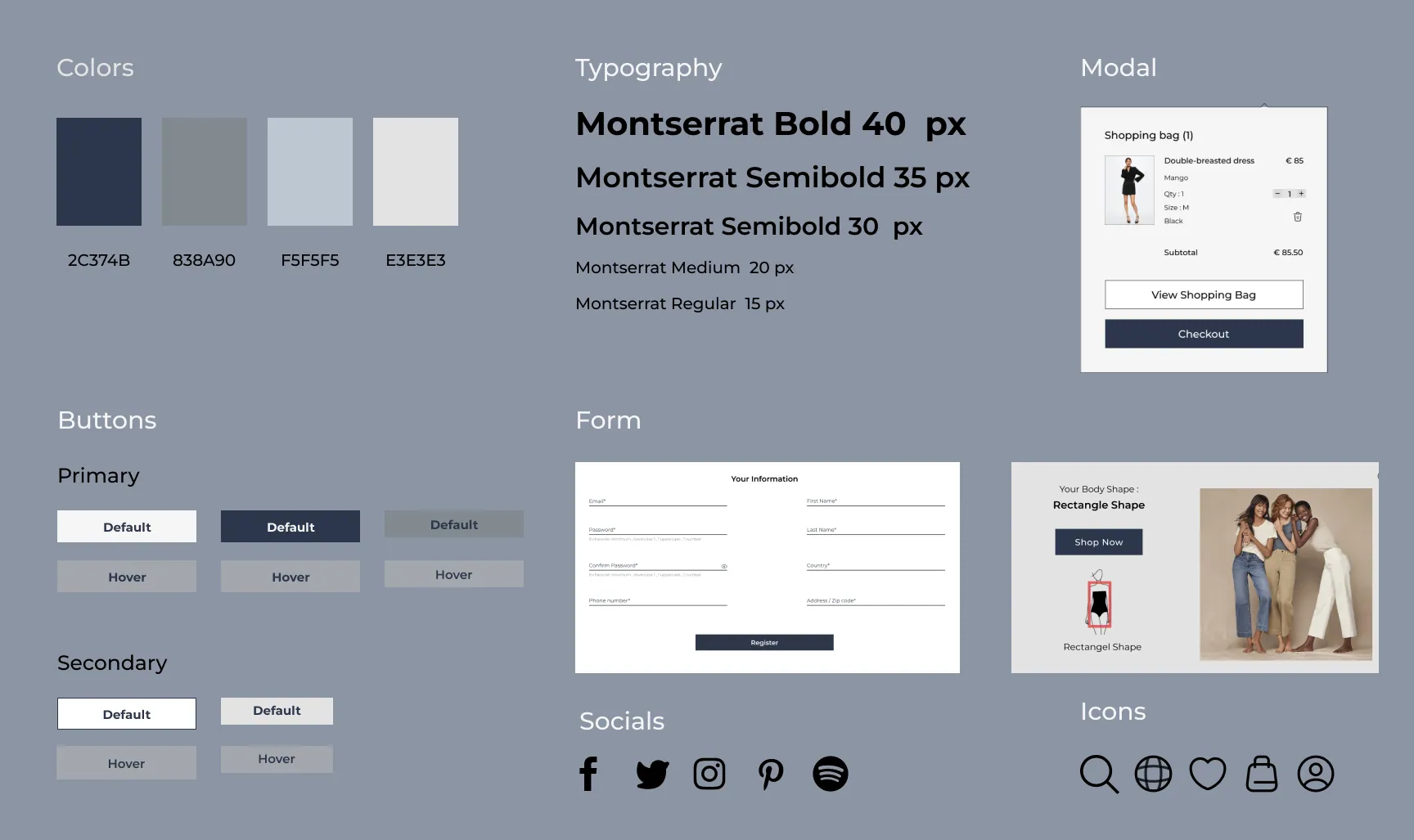
The first UI kit fixed buttons, forms, the bag modal and icons. The shipped store refined it into a calmer ink-on-white system with one blue accent and a red reserved for sale.
The heart of GESTALT is the shape finder. You enter shoulders, bust, waist and hips, and the figure on screen morphs to match while the result updates live.
Testers wanted to see something change immediately. The silhouette now morphs in real time as each value moves.
Each figure carries a small diagram of where the tape goes, so nobody has to guess what “waist” means.
A silhouette name, a one-line description and the cuts that suit it, instead of a table of numbers.
Sliders and tiles work by keyboard, carry visible focus and are announced properly to screen readers.
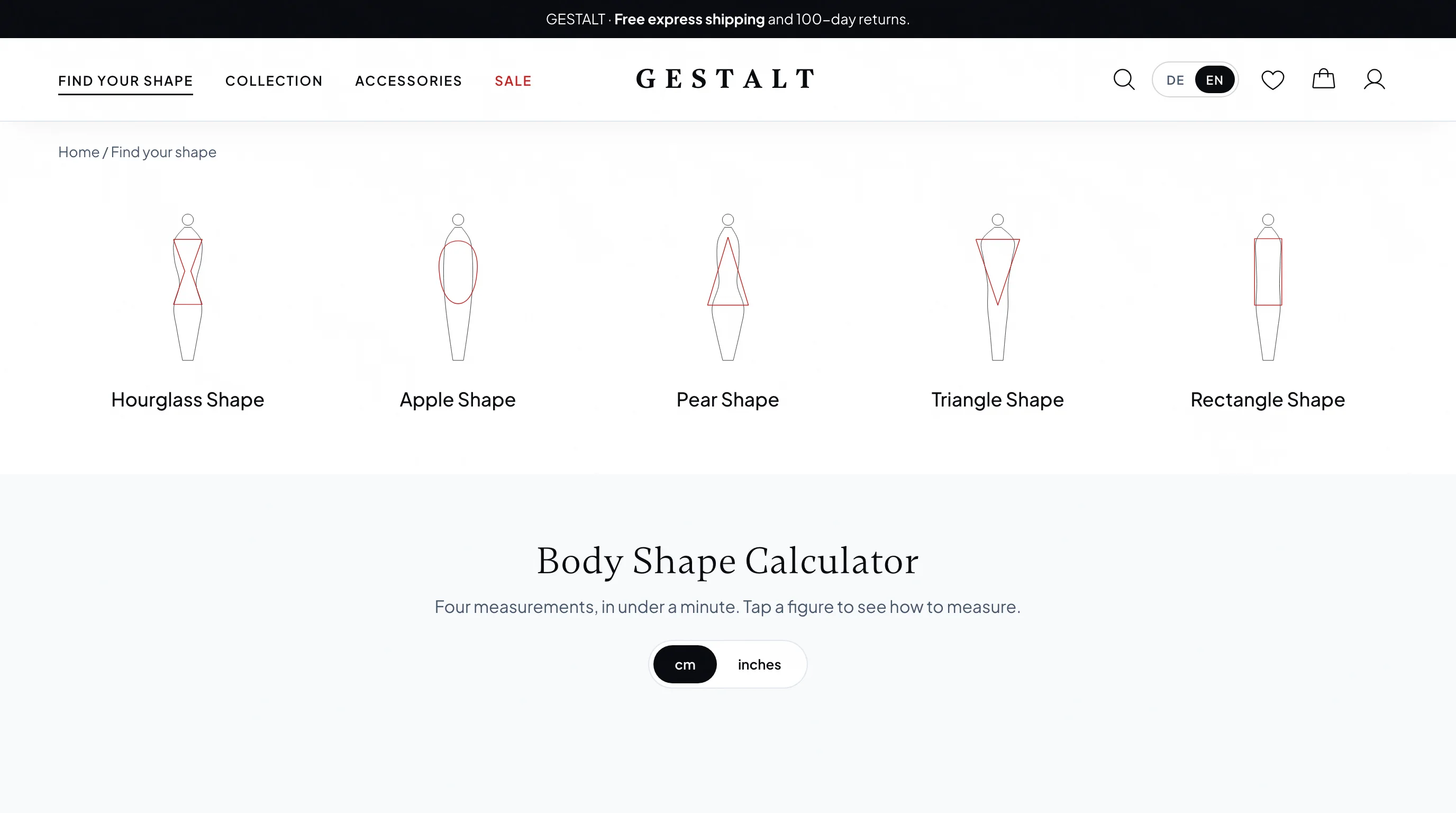
Move the four sliders. The figure reshapes live and the result names your silhouette, the same logic the store uses.
Three tests in round one and two validation sessions after the changes, plus automated WCAG 2.1 AA accessibility checks.
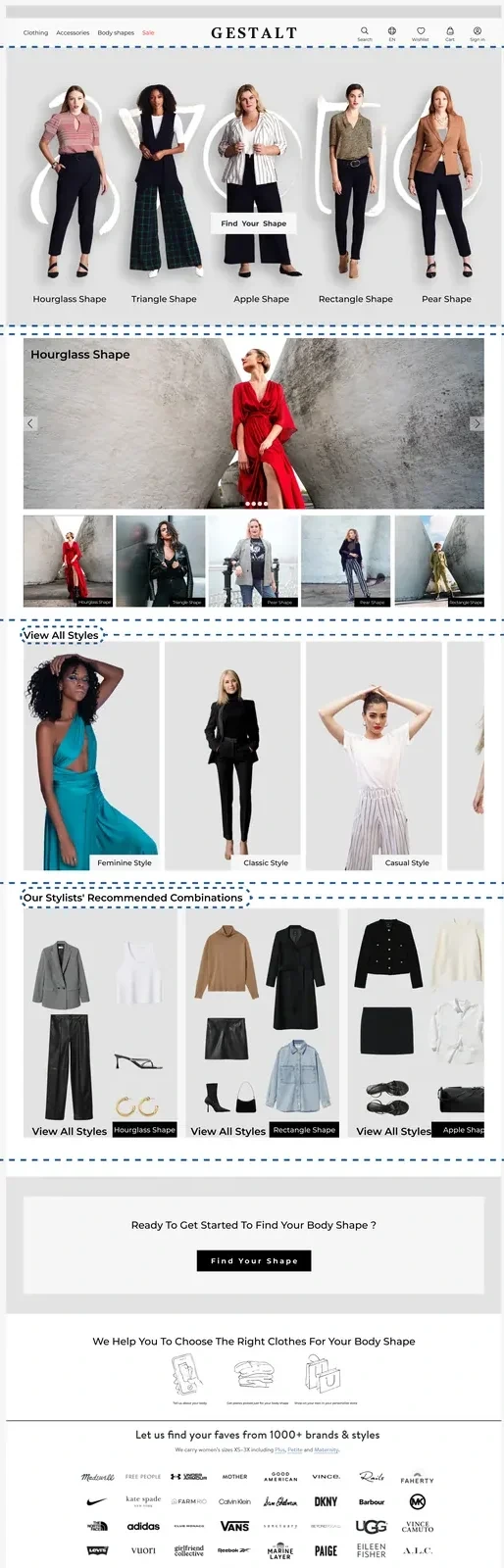
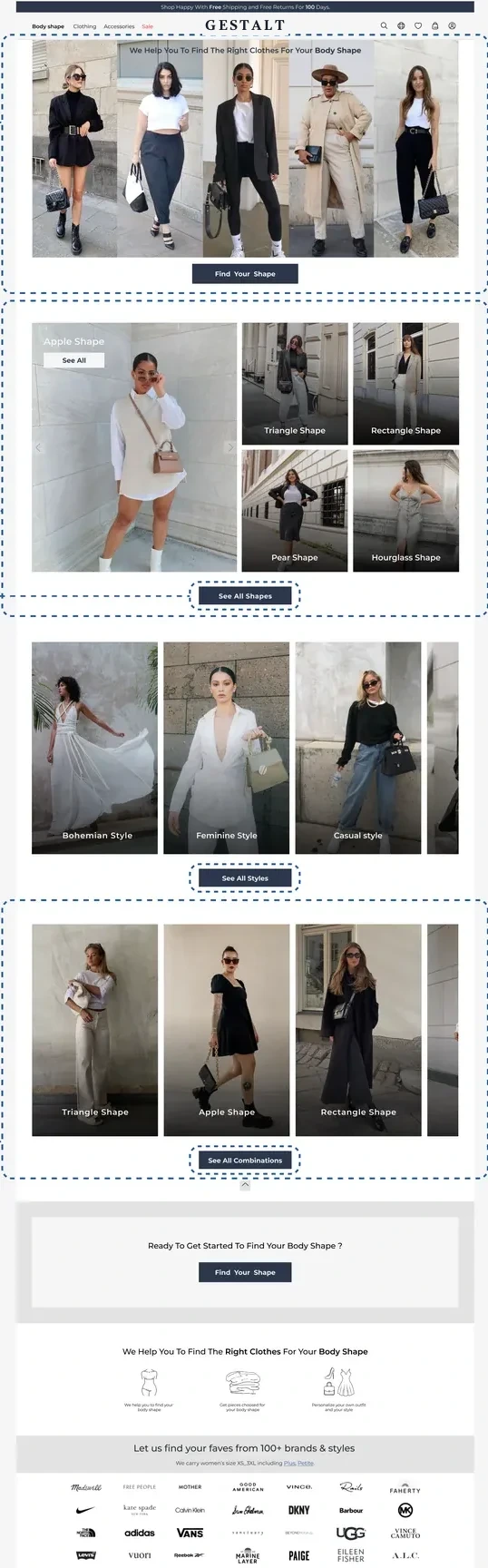
Testers found the standard hero button ambiguous. I added a clear tagline and a direct 60-second action to find your shape.
Body shapes became visual silhouettes instead of abstract text categories.
Rigid item lists gave way to tactile, selectable looks.
Complete outfits worn by real models now come with an itemised breakdown.
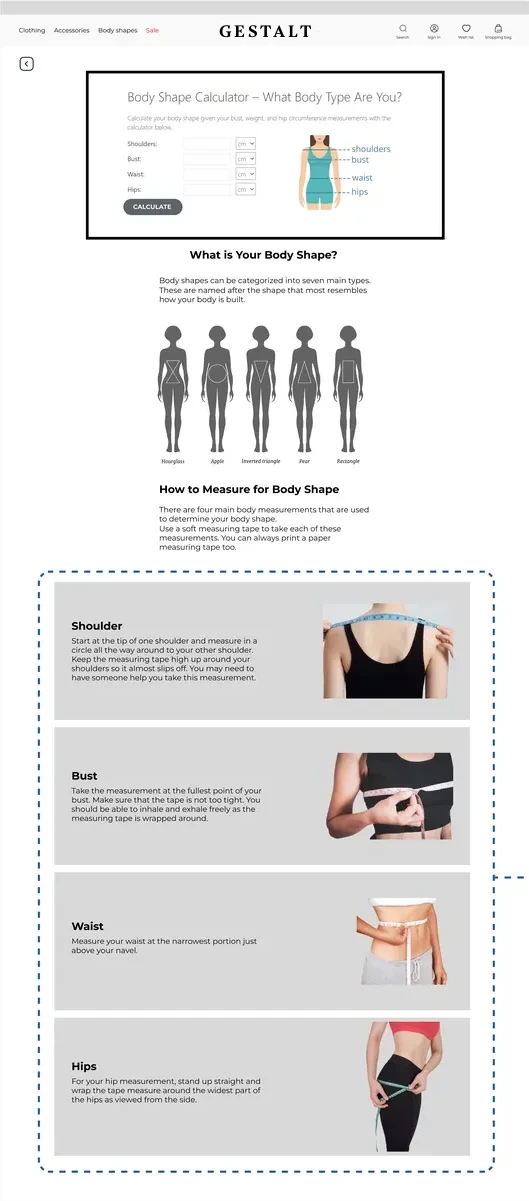
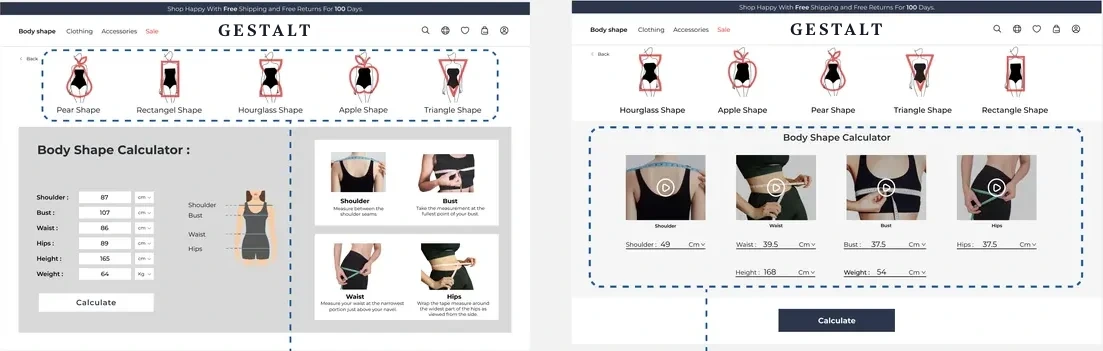
Participants wanted instant visual feedback as measurements changed, so the silhouette now morphs live.
The measuring guide uses clear diagrams and a legend.
A German / English switch and full keyboard navigation cover the sliders.
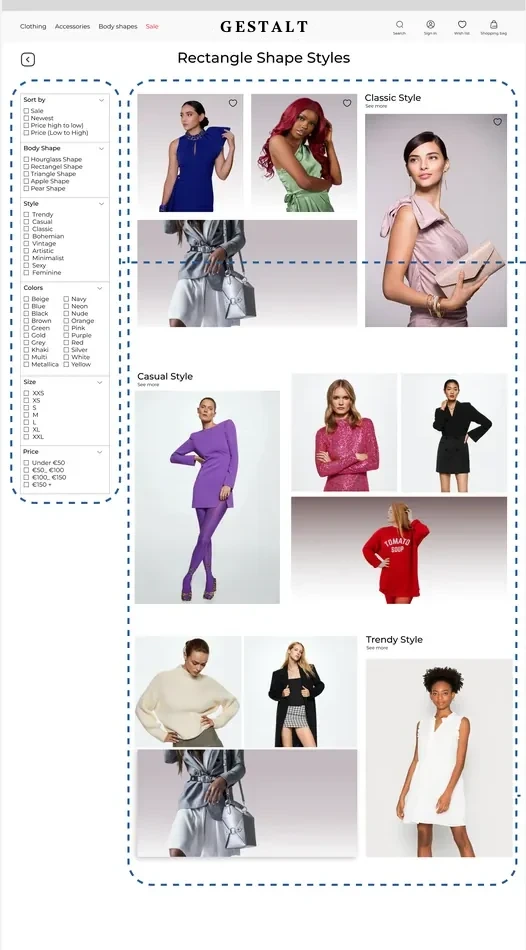
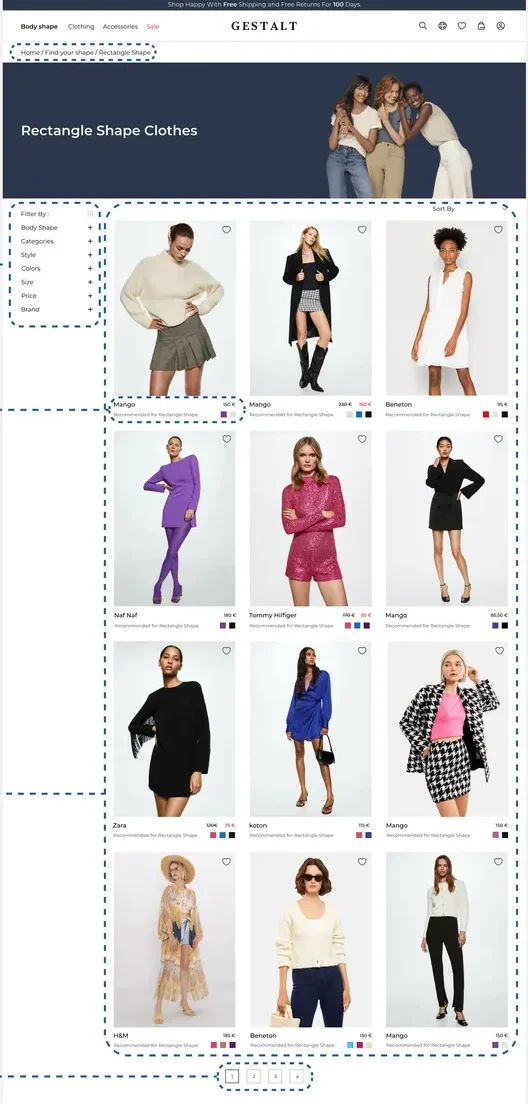
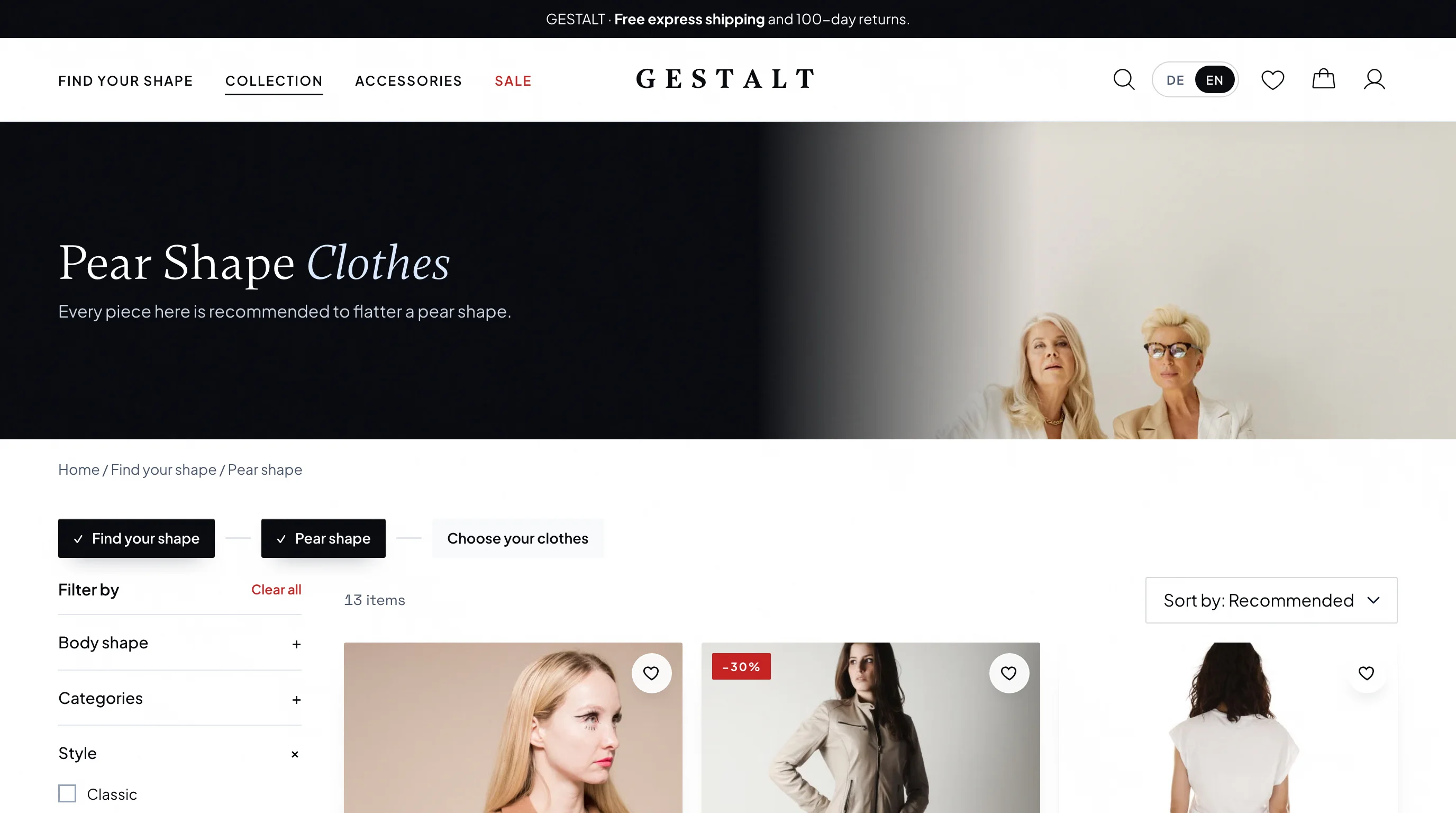
Breadcrumbs and step indicators now show where you are on the silhouette journey.
Filters by cut, fabric, occasion and season follow the identified shape.
Item cards carry badges, fabric details and a clear fit statement.
The mobile layout is tuned for one-handed use and a quick bag drawer.
A concept, so no sales figures. Here is what exists and how it was checked.
From four measurements to your silhouette
Silhouettes, each with curated looks
Languages, switchable live
WCAG 2.1 accessibility checks
Proportion first, product second.
The store opens with the body, not the catalogue. Everything else, from filters to complete looks, follows from that one decision. It is a concept: nothing here can be bought and no account data is stored.
Concept project · designed in Figma, built in HTML and CSS · German and English.
Pairing a sizing method with a 60-second flow removed the hesitation, and holding to WCAG 2.1 AA kept it usable for everyone.
Next I would test 3D garment drape, connect to made-to-measure pattern cutting, and recommend looks by climate and occasion.